How the sexualization of women in politics threatens democracy – Colorado State University News

By Stacy Nick
How sexualized discourses threaten democracy
By Stacy Nick
Published Feb. 26, 2026
Key takeaways
The sexualization of women in the political sphere has taken on a new and dangerous form that threatens democracy itself, a CSU professor argues.
For 25 years, Karrin Vasby Anderson, Colorado State University professor of communication studies, has researched gender and politics, focusing on how women politicians are framed in news coverage, political ads, internet memes and pop culture.
“I kept running into this very strange sexualization of political candidates, a very extreme sexualization,” Vasby Anderson said. “Then I noticed that it wasn’t just candidates who are being framed in overtly sexualized ways. It was also women voters as a group.”
This phenomenon, which Vasby Anderson calls the “pornification frame,” represents a backlash against women’s political progress in the United States by linking female candidates, politicians and voters to pornographic imagery and themes. It undermines their capacity for leadership and diminishes their credibility as a voting bloc, ultimately eroding the quality of democracy itself, she said.
Vasby Anderson has researched this trend, initially focusing on the 2008 U.S. presidential campaign, assessing news stories, online commentaries and viral videos, campaign ads and get-out-the-vote campaigns. Using this research, she is now working on a book titled, Promiscuous Politics: Political Pornification, Authoritarianism and the Rhetorical Making and Unmaking of Democratic Community.
The sexualization of women in politics has deep historical roots traced back to the abolition movement, which marked the first moment when women asserted their power in the public sphere, Vasby Anderson said.
Women abolitionists were viewed as scandalous for speaking to “promiscuous audiences” – groups of men and women, she said. They justified their activism by presenting themselves as moral guardians fighting against slavery’s degradation of Black women.
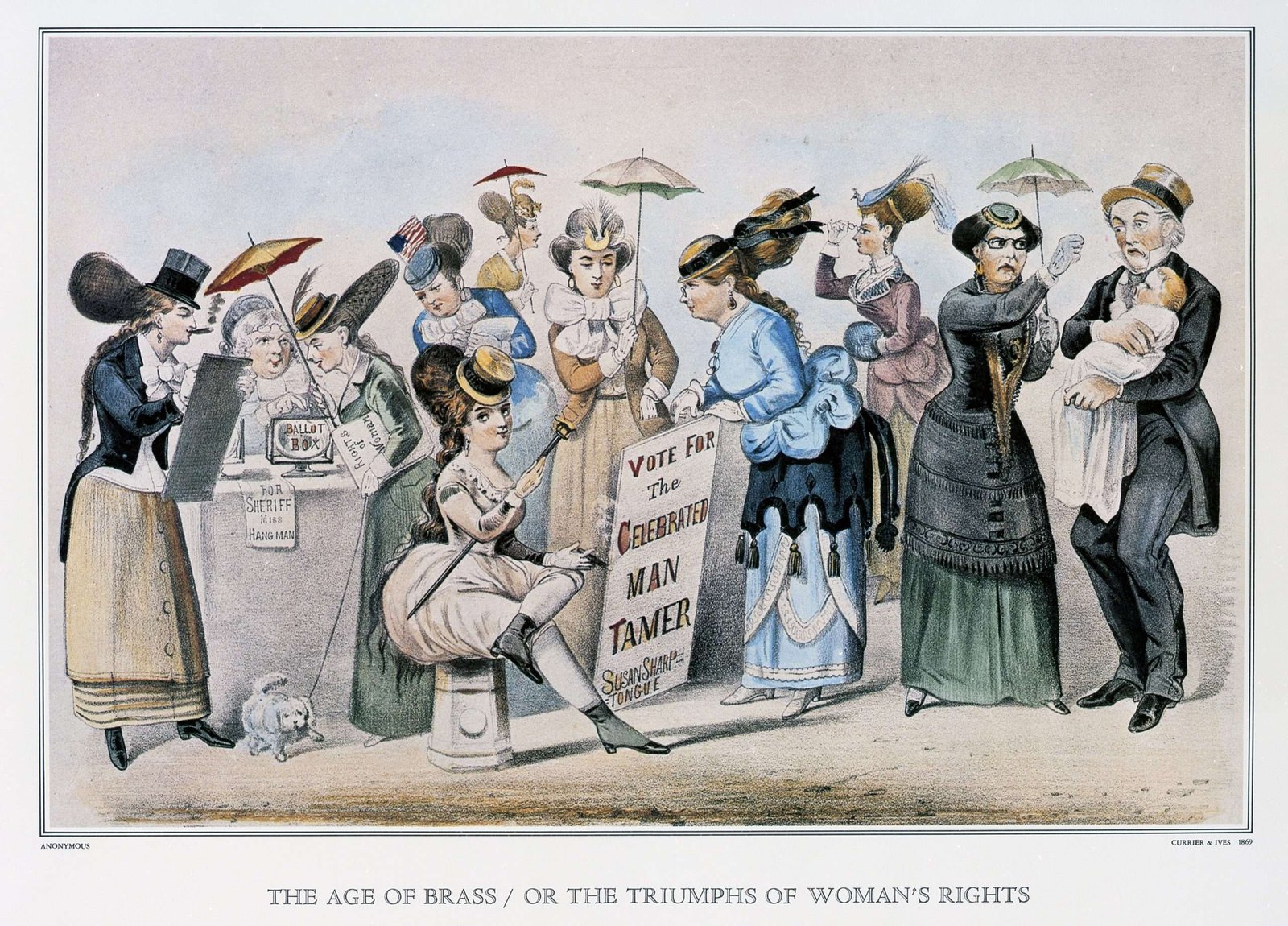
This moral authority eventually gave rise to the women’s suffrage movement, which faced its own backlash. Opponents to suffrage sexualized suffragists, attempting to discredit them by labeling them “public women,” a euphemism for prostitutes.
Women’s suffrage was ultimately achieved not because of a belief in gender equality but because women were seen as moral guardians who could “clean up” politics, Vasby Anderson explained.
“Campaigns depicted women as housekeepers literally sweeping corruption out of Congress,” she said.
Sexualization of women in politics continues today, serving as a powerful tool for authoritarianism and political control, Vasby Anderson said. And it is not exclusive to one political party.
One example is the treatment of Vice President Kamala Harris during the 2020 and 2024 presidential campaigns. Memes and slogans such as “Joe and the ho gotta go” cast Harris as a prostitute, echoing the same tactics used a century ago to discredit suffragists.
Even nonpartisan campaigns featured sexualized imagery. Vasby Anderson points to the 2008 Declare Yourself campaign, which aimed to increase voter participation among young people who had previously skipped going to the polls, using the slogan “Only you can silence yourself.” While male celebrities were depicted as businessmen and blue-collar workers with their lips stapled shut, female celebrities, including Jessica Alba, were portrayed as assault victims – naked, bruised and crying, with black tape wrapped around their mouths and bodies.
“When I show it to my college students now, I say, ‘In 2008, this is how they were trying to convince young people to vote. Does this appeal to you? Does this motivate you to go out and vote?’” Vasby Anderson said. “Now young people are horrified by it. But at the time, it didn’t really set off alarm bells because we were so used to seeing images of women violated, abused and sexualized in our movies, TV shows and politics.”
The sexualization of women in politics is deeply connected to authoritarianism, Vasby Anderson argued. Authoritarian regimes often target women’s rights, transgender rights, and the rights of marginalized groups to consolidate power and suppress dissent.
“There’s been a lot of discussion about how authoritarianism is connected to racism and nationalism,” she said. “There’s been less conversation about the explicit connection between authoritarianism and sexualized misogyny and transphobia.”
Addressing these issues is critical to building a healthier, more inclusive democracy, Vasby Anderson said.
Pop-culture connections
Combating authoritarianism requires action at both systemic and individual levels, she said. That’s why institutions like universities are so critical to teaching students to think critically about what they see – whether it’s on the evening news or an episode of Saturday Night Live.
To that end, Vasby Anderson is part of a team developing CSU’s new Center for Democracy, Art and Popular Culture, which will have a soft launch next month at CSU’s Democracy Summit.
“Politics is increasingly happening outside the traditional political arena,” she said. “The center’s co-director, Dr. Nick Marx, and I both study how what happens in digital and popular media can either bolster or erode the health of our democracy.”
Nick Marx is an associate professor of film and media studies, whose research includes a focus on the intersection of politics and comedy.
“Most people engage in politics via screens, so it only makes sense to simultaneously examine what entertainment those same screens are delivering,” Marx said. “Our democracy and popular culture are much, much more entangled than many people want to admit.”
Vasby Anderson noted that people who are “not into politics” still have a role to play in making our democracy healthier and more inclusive. As we scroll through social media, talk to our friends about TV and films, and listen to podcasts, we should reflect on how what we’re tuning into is encouraging us to think about each other, our community and those we elect to represent us.
At the individual level, people can challenge the sexualization of women in politics by:
“It requires each of us on a micro level to say, ‘That’s not acceptable,’” Vasby Anderson said, adding that the stakes are high.
America is at a pivotal moment, when the country can either emerge with a stronger, more inclusive democracy – or slide into authoritarianism, she said. The path forward depends on collective action at every level of society.
“The way you beat authoritarianism is by standing up for democracy in each of our spheres of influence – as consumers, as voters and as users of the internet,” Vasby Anderson said.
“We all have a role to play in ensuring our democracy remains strong and inclusive.”
Expert Bio
Gender and culture • Campaigns and democracy • Expertise keyword • Presidential communication
Karrin Vasby Anderson researches the culture of politics and the politics of culture, examining the ways in which political identity is rhetorically constructed and contested in popular media.
More info | Arrange an interview
Related Stories
© 2024 Colorado State University, Fort Collins, Colorado 80523 USA