Today's e-Edition
Get Morning Report and other email newsletters
Get Morning Report and other email newsletters
Today's e-Edition
Trending:
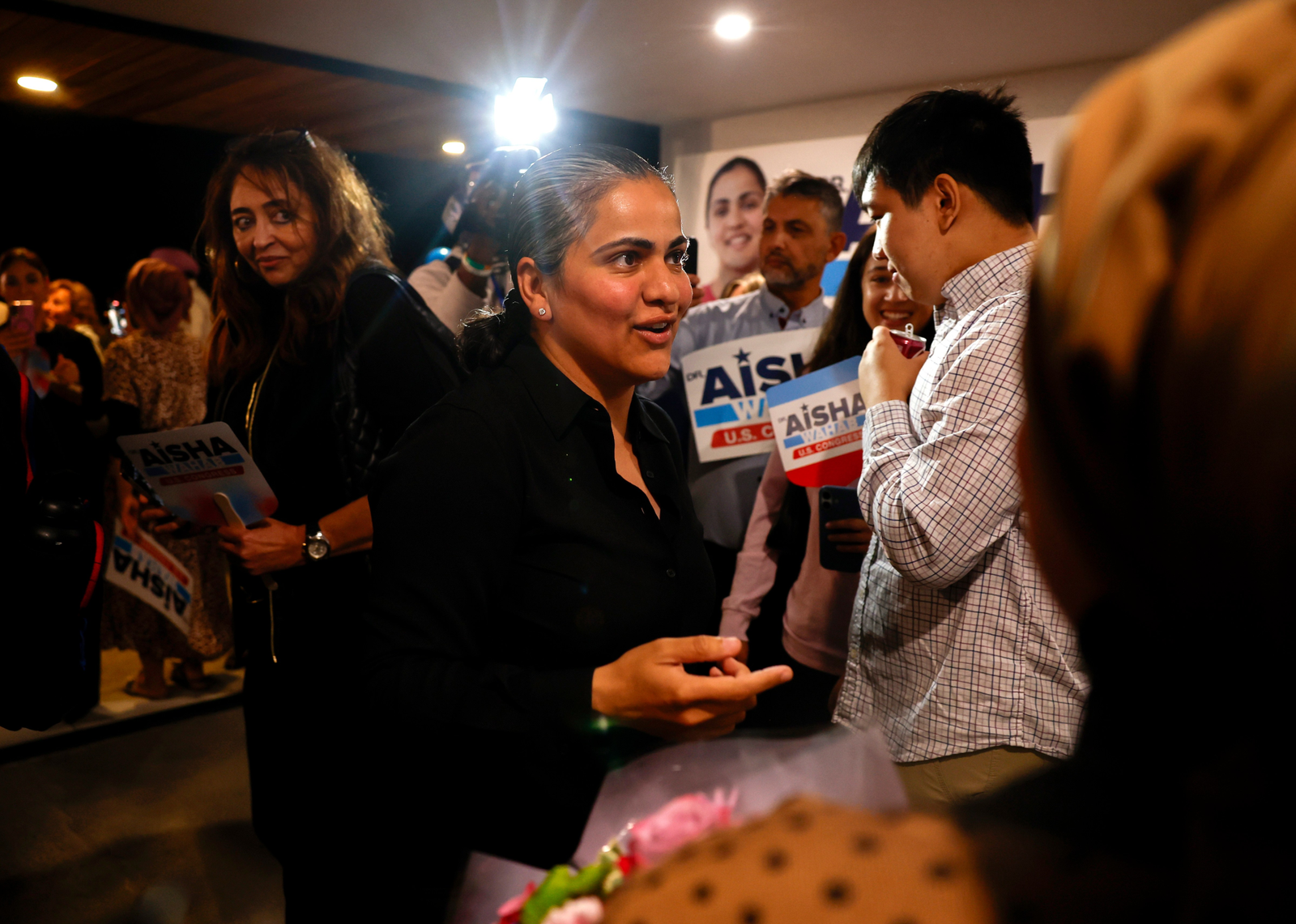
As state Sen. Aisha Wahab prepares to be sworn in as the first Afghan American elected to Congress, finishing the term of disgraced former Rep. Eric Swalwell, a local Democratic leader is criticizing the role that outside spending ties to pro-Israel interests has played in the race between Wahab and BART Board President Melissa Hernandez.
Igor Tregub, chairman of the Alameda County Democratic Party Central Committee, called ads attacking Wahab that were financed by money tied to the American Israel Public Affairs Committee, or AIPAC, “dogwhistles,” and said he was “disgusted” by them. The ads have targeted Wahab’s stances and records on persecuting sex offenders, public safety and crime, housing and affordability — attacks she’s denied and pushed back against.
He said he was pleased the ads failed to deliver the race for Hernandez.
“I was glad to see at the end of the day that that level of money was wasted in our district,” Tregub said.
Some voters also were displeased with a swarm of negative ads that surged into the Congressional District 14 race leading up to the Aug. 18 special election runoff – both against Wahab and in favor of Hernandez.
“That was problematic for me,” Greg Humpa, a 62-year-old Hayward resident, told Bay Area News Group on Election Day at Hayward City Hall.
Humpa said he didn’t like Hernandez’s pro-Israel affiliated financial backers because he doesn’t support the country’s ongoing war with Hamas in Gaza. He said he voted for Wahab.
In the Aug. 18 runoff, Wahab secured 53% of the vote to Hernandez’s 47%. Nearly a month earlier, in the special primary election on June 16 with a crowded field of candidates, Wahab received 43% of the vote to Hernandez’s 17%.
“Wahab dodged a bullet. But Hernandez demonstrated that she is very vulnerable,” Dan Schnur, a political expert, told Bay Area News Group. “If AIPAC and business interests decided to spend as heavily for the general election as they did in August, it’s entirely possible that the outcome could be reversed.”
Overcoming the deep pockets of her opponent’s backers will be key for Wahab in November, Schnur said.
“Even though she won’t be an incumbent for very long, there are still significant advantages that come with incumbency. So Wahab needs to both solidify her existing rapport, but also try to find ways to demonstrate to Hernandez’s financial backers that this wouldn’t be a good use of their money,” Schnur said. “They’ve already spent a great deal of money and come up short, but it does appear to be a winnable race if they want to double down.”
Swalwell, who is currently entangled in an ongoing FBI criminal investigation, abandoned his East Bay district spanning parts of southern Alameda County and the Tri-Valley and a gubernatorial campaign earlier this year after multiple women accused him of sexual misconduct.
Both Wahab and Hernandez will face off again in a Nov. 3 rematch in the runoff election for the new full term — this time with Wahab running as the incumbent congresswoman.
Independent groups have so far spent more than $5 million in support of Hernandez, including the AIPAC-affiliated United Democracy Project. The group independently spent over $2.4 million on ads in favor of Hernandez and opposing Wahab in the two weeks prior to the Aug. 18 special election, according to financial disclosures.
Hernandez has repeatedly refused to respond to Bay Area News Group inquiries about her financial backers and whether she has any ties to AIPAC.
The ads didn’t sway Pleasanton voter Joe Johal, 61, who voted for Hernandez.
“She has proven herself over the years to work on the issues that are relevant,” Johal said.
Tregub also took issue with Democratic leaders who went against the party’s endorsement of Wahab and directly campaigned for Hernandez – namely representatives Zoe Lofgren, Pete Aguilar and Nancy Pelosi, who all lobbied Wahab earlier in the race to step aside and allow a placeholder candidate in the special election to fill the remainder of Swalwell’s term and avoid a runoff.
A day before the Aug. 18 election, Lofgren posted a video criticizing Wahab for refusing to go along with the Democrats’ plan, and urged voters to support Hernandez.
“That is far from what should happen,” Tregub said. “My heartfelt hope and goal is for that not to happen, now that there has been a determinative election outcome.”
Lofgren did not return a request for comment on this story. Representatives for Aguilar’s and Pelosi’s offices did not immediately return a request for comment Friday.
Wahab isn’t the only candidate who has had to overcome pro-Israel and AIPAC-affiliated money to win an election.
Abdul El-Sayed, a progressive and critic of Israel, recently overcame $30 million in AIPAC spending to beat Rep. Haley Stevens to become the first Muslim to win a major party’s primary for Senate. In Missouri, money from the United Democracy Project aided incumbent Democratic Rep. Wesley Bell’s victory in a primary against Cori Bush, a former congresswoman and progressive.
Paul Mitchell, an elections data expert and vice president of Political Data Inc., said another important factor that could influence the Congressional District 14 race in November is the district’s new boundaries, which includes a new electorate with thousands of new voters.
The state redistricted California’s congressional districts after voters in November 2025 approved Proposition 50 to counter redistricting by Republicans in Texas.
“Special elections are really volatile,” Mitchell said. “It’s prone to these seemingly more erratic changes of forces in these races sometimes. But it does happen quite a bit that the primary goes one way and the general shifts.”
Copyright 2026 The Mercury News. All rights reserved. The use of any content on this website for the purpose of training artificial intelligence systems, algorithms, machine learning models, text and data mining, or similar use is strictly prohibited without explicit written consent.

