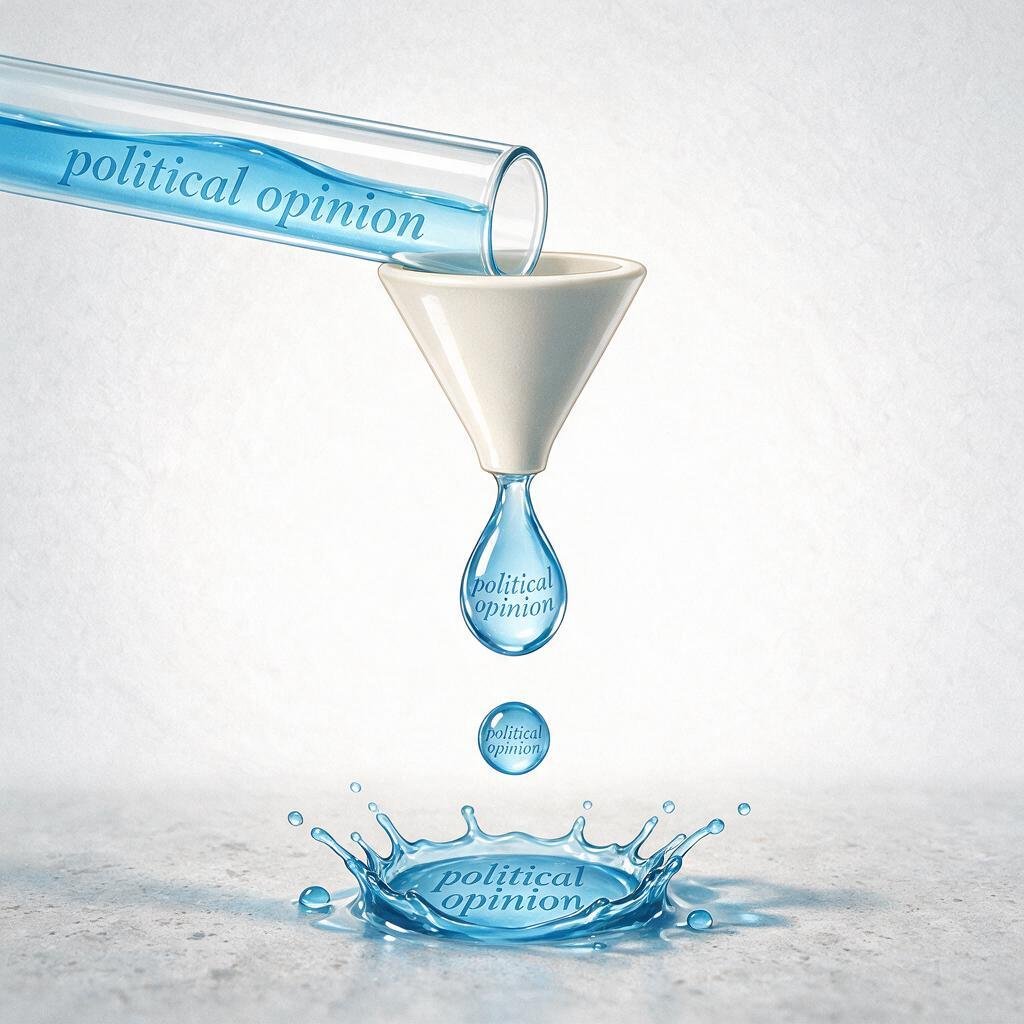

For many college students, politics can feel exhausting. Every election brings another argument, another headline and another reason to believe neither side fully represents us. But being frustrated with politics should not mean being disengaged from it. If anything, our frustration should make us more willing to participate, because opting out only gives someone else the power to make the decisions we are frustrated about. For Gen Z, the issue may not be that students do not care about voting, but that political frustration and practical barriers can make participation feel more difficult than it should.
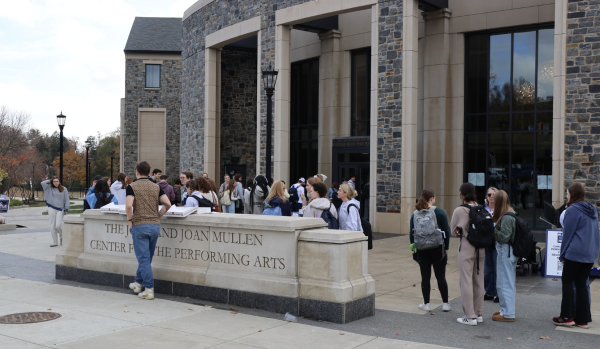
Hally Ammons, Assistant Director for Government & Community Relations, has been involved with Let’s Vote Nova since 2021 and has seen those barriers firsthand. When the organization began advocating for a polling place on campus, students faced obstacles including off-campus polling locations, different voting zones and confusion surrounding registration. The establishment of an on-campus polling place made a noticeable difference. In 2024, when Villanova held its first election on campus, Let’s Vote Nova saw a significant increase in turnout.
Sometimes students are not disengaged. They are simply being asked to navigate a process that was not designed with their circumstances in mind. Registration can be particularly confusing for college students.
Megan Lawn, who is also involved with Let’s Vote Nova, said, “Students have encountered people canvassing on campus who provide incorrect information about registering. Some students have even believed they were registered, only to check their status and discover they needed to correct their registration.”
Students should verify their registration and make sure their information is correct before Election Day. Let’s Vote Nova provides resources for Villanova students to understand their options, including registering on campus, registering at home or voting by mail. But removing logistical barriers is only part of the problem. There is also frustration with the political process itself.
Ammons said that, “Politics today can feel increasingly binary, creating an ‘us versus them’ mentality where people feel pressured to choose a side even when neither side completely reflects their values.”
For young people, that can make political engagement feel less welcoming. Social media can make this worse by reducing complicated issues into arguments that fit neatly into an algorithm. Nuance does not always perform well online, and it can be difficult to feel represented when political conversations seem to demand that people choose a team.
Lawn pointed out that, “students can still participate even when they disagree with their representatives or feel that neither political party fully represents them. Local elections can also be decided by surprisingly small margins, making an individual vote more significant than students may realize.”
There is a perception among young voters that their vote does not matter because older generations will overpower them at the polls. Lawn described this as a “placebo effect,” where people convince themselves their participation will not make a difference, so they do not participate at all. The problem is that college students are already one of the least represented groups in elections, outside major general elections. If young people believe their voices are not represented and respond by not voting, their voices become even less represented.
At Villanova, Let’s Vote Nova is trying to make participation more accessible year-round. The organization is currently focused on helping students register ahead of the Oct. 19 registration deadline and preparing students to vote in the Nov. 3 election. It also works beyond major election cycles, providing a nonpartisan resource for students to stay informed and engaged throughout the year.
That is the part of politics that can get lost when elections become reduced to candidates, parties and arguments. Voting does not have to be something students dread. Ammons remembers the excitement surrounding Election Day in 2024, when students gathered together on campus to vote. Not everyone standing in line supported the same candidate, but they were still participating.
That is what I think Gen Z needs to remember. We do not have to love every candidate, agree with every politician or feel perfectly represented by a political party to participate. Being frustrated is normal. Being skeptical is healthy. But giving up is different.
If students do not like the direction of their government, they should use that frustration as motivation to become more informed, vote, volunteer or find another way to participate. The political system has plenty of flaws, but disengaging from it does not fix those flaws. For Villanova students, that can start with something simple: check your voter registration, make a plan to vote and bring your friends with you.
Maybe that is exactly what Gen Z needs, not another lecture about why we should care about politics, but a reminder that we already have the power to participate, and we should not hand that power away simply because we are frustrated.
Voting Registration Link: https://www.pavoterservices.pa.gov/pages/voterregistrationstatus.aspx
Your donation will support the student journalists of The Villanovan with technological needs, training, and more.
Your email address will not be published.