
Kalshi's head of research weighs in on election betting, possible regulations | CA Politics 360 – KCRA

Millions of dollars have been wagered on California's governor's race through predictive market platforms, despite online sports betting being illegal in the state, prompting concerns from some lawmakers, regulators and gaming tribes.
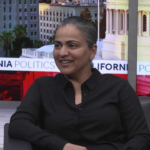
Platforms like Kalshi and Polymarket allow users to bet on a variety of topics, including elections, weather, album rankings, and IPO announcements. This week, representatives from Kalshi visited California to address concerns about predictive markets. Nicole Kagan, Kalshi's head of research, explained the platform's purpose and safeguards in an interview on California Politics 360.
"Seventy-five percent of the people that come to Kalshi never even trade," Kagan said. "They're just there to look at our markets because they have incredible information value. We actually just released a study using 2.2 million data points across the last five years of the exchange history. What we found is, you know, when we say something has a 70% probability of happening, it actually happens about 70% of the time, which makes it one of the best-calibrated forecasting tools that exists."
Kagan described Kalshi as a peer-to-peer exchange rather than a sportsbook. "We don't make money when people lose. We charge transaction fees. So, we're totally agnostic to the outcome," she said.
Concerns have been raised about the potential influence of financial interests on elections, particularly as more than $10 million was bet on the California governor's primary race and $50 million on the general election. Kagan addressed these concerns by highlighting the platform's market integrity measures.
"Market integrity is really important to us," Kagan said. "We have a robust surveillance mechanism. We have affirmative trading prohibitions that stop people like campaign staff participating in particular markets, which means that they're actually structurally barred from trading within markets where they do have access to knowledge that other people don't have."
Kalshi also employs a "know your customer" (KYC) system to ensure transparency.
"It means that we collect information like your first name, your last name, your address, your Social Security number, which means that people have at most one account," Kagan said.
While Kalshi offers markets on a wide range of topics, Kagan noted that the platform avoids listing markets on sensitive issues like wildfires, war, terrorism, or death.
"We would never want somebody to go out and commit arson or to start a fire because they would financially benefit from doing that," she said.
Kagan also shared examples of how small businesses have used Kalshi to hedge risks.
"There is legislation in California that has recently increased the price that goat farmers and goat herders would have to pay their staff as a minimum wage amendment," she said. "Faced with effectively the devastation of the industry that they have, they've been working on for such a long time, some goat herders in California actually came to Kalshi and said, 'We want to hedge out this risk that there is no change to this legislation.'"
Another example involved an ice cream shop in Los Angeles. "It realized that it makes less money when it's not warm outside. To protect against the downside risk of a rainy day, they put a position on the weather on Kalshi," Kagan said.
As Kalshi continues to expand, Kagan expressed the company's willingness to work with state governments. "We want to work with the states, we want to come to the table, and we want to have reasonable discussions about things that make sense," she said.
Kagan concluded by emphasizing the platform's value as an information source. "Most people that come to Kalshi don't ever trade. They just look at the markets and the probabilities and use that to inform their decision-making," she said.
KCRA 3 Political Director Ashley Zavala reports in-depth coverage of top California politics and policy issues. She is also the host of "California Politics 360." Get informed each Sunday at 8:30 a.m. on KCRA 3.
Hearst Television participates in various affiliate marketing programs, which means we may get paid commissions on editorially chosen products purchased through our links to retailer sites.