
How to handle Donald Trump – and other World Cup lessons for the LA Olympics – The New York Times

Olympics
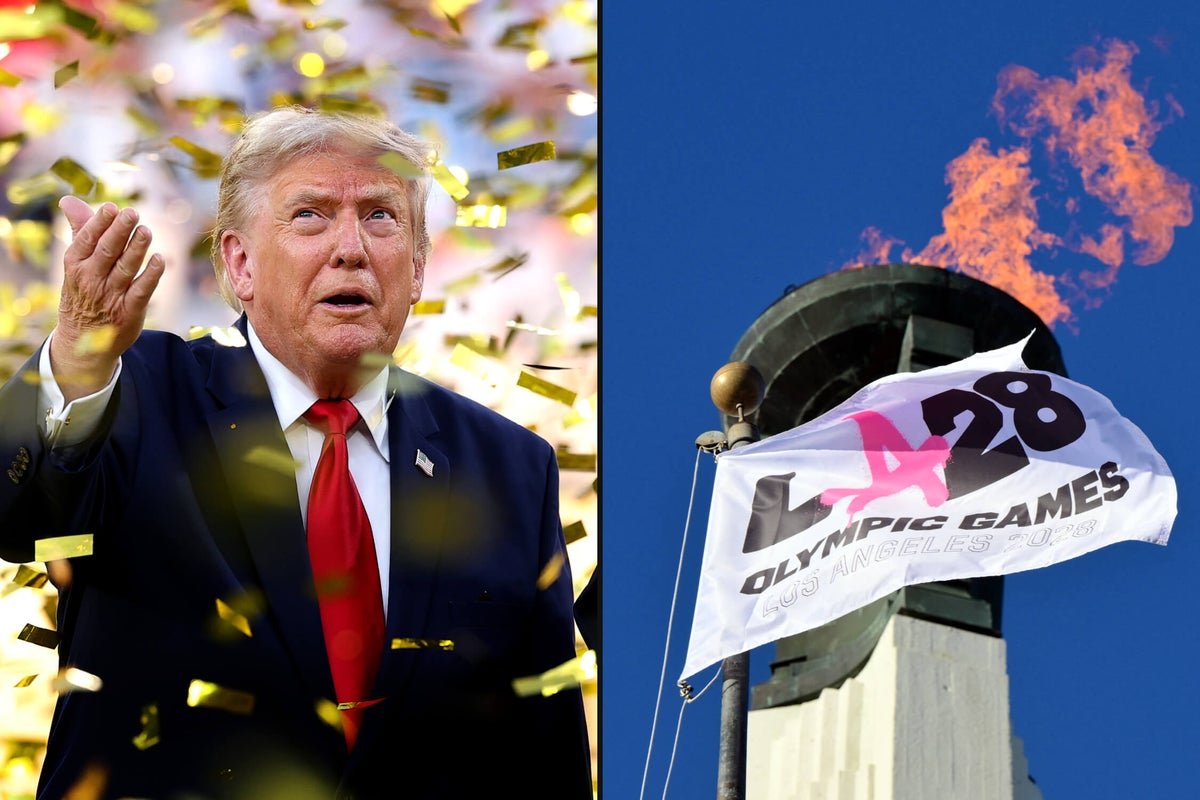
Can the L.A. Games learn from FIFA's handling of President Donald Trump? Getty Images
No sooner has one great sporting show rolled out of town than another looms large on the horizon.
Just over a month after the biggest World Cup ever staged, attention is already shifting to the Los Angeles Olympics and Paralympics, when about 15,000 athletes from 206 countries, and millions of fans, will descend on California.
Advertisement
In precisely two years, LA will be bringing down the curtain on the Paralympics after what it hopes will be a summer that matches the commercial and sporting success of the World Cup — but avoids the controversies, particularly around politics.
Gianni Infantino, the FIFA president and International Olympic Committee (IOC) member, was regularly lambasted for his close relationship with the United States president, Donald Trump — who will be approaching the end of his second and final term in July 2028 — with criticism reaching a crescendo over perceived political interference during the Folarin Balogun controversy.
So what, if anything, can the IOC and the 2028 organisers learn from the World Cup?
Kirsty Coventry, the IOC president and a former swimmer for Zimbabwe, attended the World Cup final in July, knowing that it would soon be her on stage with Trump to open the Games at SoFi Stadium on July 14, 2028.
Earlier in the year, Coventry admitted she was yet to speak to Trump, having caused a stir in a March 2025 press conference when she said she had “been dealing with, let’s say, difficult men in high positions” for more than two decades. Even though they both attended the World Cup final, Trump and Coventry did not meet, with the pair sitting in different sections of New Jersey’s MetLife Stadium.
Although Coventry is the IOC’s figurehead, the Games’ contractual obligations actually rest with Casey Wasserman, the chairman of the LA28 organising committee, and his team.
There is a dedicated Government Federal Affairs team within LA28 that engages with the White House Task Force — a group established and chaired by Trump — on the 2028 Summer Olympics.
Dialogue with the White House is not exclusively down to LA28, though, and you would expect the IOC and Coventry to get involved on key issues, such as visas, as the Games edge closer.
Advertisement
For Andrew Giuliani, the executive director of the White House Task Force for the 2026 World Cup, it is impossible for the Olympics to succeed without a solid relationship among all the relevant parties.
“It was an incredibly smart thing to do,” Giuliani tells The Athletic when asked about Infantino’s and Coventry’s differing approaches to Trump. “You’re hosting what’s going to be the largest version of the World Cup, you’re talking to the leader of the free world and you have the opportunity to develop a relationship with him.”
The relationship between Infantino and Trump, Giuliani says, “was one of the main reasons the World Cup was so successful”.
“My advice to Kirsty is that your best resource is sitting right there in the Oval Office,” Giuliani adds. “If you don’t form that relationship, and if you don’t take advantage of that, you are not maximising these Olympics.
“These Olympics can be the best Olympics ever, and maybe the greatest sporting event ever. They have the potential.
“But what I can tell you is if you don’t tap into President Trump’s mindset and into his ability to host major events, then you are leaving something on the table.”
After more than a year in the job, Coventry’s approach to being the president of a sport’s governing body starkly contrasts with Infantino’s tenure.
The FIFA president, with nearly six million followers on Instagram and a dedicated team that produces the content for his feed, was front and centre of the World Cup, whether it was in the Oval Office with Trump or attending two games a day.
Coventry has gone down a different route, although during the IOC election, she did campaign on matters close to Trump’s heart, such as restricting the female category at the Olympic Games and other IOC events to “biological females”.
This policy was announced in March and will be implemented from LA28. The IOC has also lifted its suspension of the Russian Olympic Committee, paving the way for Russian athletes to compete under their country’s flag in Los Angeles.
Even though there is no suggestion that Coventry and the IOC did this to placate the White House, it does show common ground between the two parties, with Trump previously making overtures to Vladimir Putin, the Russian president, despite the continuing conflict in Ukraine.
As Giuliani puts it: “There is as much politics in global sports as there is in Washington, D.C.”
Advertisement
Although Infantino’s relationship with Trump drew much of the attention regarding FIFA’s approach to the World Cup, staff at the governing body worked tirelessly behind the scenes to ensure the tournament went as smoothly as possible.
In 2023, for example, FIFA established a dedicated Government Relations and Engagement Division within FIFA26 — the collective group of subsidiaries established by FIFA to organise the tournament in the U.S., Canada and Mexico — in Miami, Washington, D.C., Toronto and Mexico City.
There were also regular meetings and conversations with representatives from local governments and federal agencies, visits to Capitol Hill, coordination of Embassy Workshops, and participation in other diplomatic forums. From a safety and security standpoint, the World Cup was seamless.
Securing visas for about 15,000 athletes — including the Paralympians — and all of the backroom staff is no small feat, and the World Cup showed it isn’t a straightforward process.
While pre-tournament concerns about possible interventions by Immigration & Customs Enforcement (ICE) on foreign nationals were not realised — there was no immigration enforcement presence at any of the 104 matches (although ICE did deploy staff to address issues around human trafficking and counterfeit vendors) — there were controversies.
Omar Artan, a referee from Somalia, was denied entry to the U.S. before the World Cup, while several Iranian officials also had their visa applications denied, with the national team also needing to move from the L.A. training base to one in Tijuana, Mexico, at relatively short notice.
To get ahead on visas, LA28, which embedded some staff members with FIFA during the World Cup, has established an internal team dedicated to global mobility and visa support to navigate U.S. entry requirements.
Advertisement
One concession FIFA received from the U.S. government was the establishment of the FIFA Pass, which was an expedited way for supporters with tickets travelling to secure visa appointments. It did not have any material impact on whether their application would be approved.
Trump also imposed partial travel bans on four countries — Iran, Senegal, Haiti and Iran — before the World Cup, which, again, is something LA28 and the IOC will need to be aware of, especially given there are over three times as many countries at the Olympics.
“There was a ton of talk before the World Cup, saying it won’t be welcoming, the athletes won’t be let in,” Giuliani says. “Every athlete got in, every coach got in. There was one official who didn’t.
“I go back to what Secretary (of State) Rubio said, in that we were not going to let a soccer tournament be the guys to let bad actors into the United States to cause harm to American citizens or our international guests.”
“For political purposes, there will be distractions and people will want to throw cold water on the potential for these Games,” he adds.
“One of the reasons the World Cup was so successful is that it never came down to one individual. It was an incredible team that was willing to work through two government shutdowns to be able to achieve its mission, and that’s where the success is going to be based.”
Perhaps unsurprisingly, a working relationship has been formed between the FIFA26 Government Relations and Engagement Division and their LA28 counterparts, which has already enabled the exchange of information on visas and transportation.
Advertisement
Another area LA28 hopes to follow in FIFA’s footsteps is the income generated from commercial deals. FIFA is expected to generate a record-breaking $15billion (£11bn) during its 2023-26 cycle, largely due to the World Cup’s appeal.
The introduction of hydration breaks effectively split matches into four quarters and created an additional window for advertisers to part with their cash.
Infantino said that FIFA did not gain extra revenue for the breaks — not at this summer’s tournament, at least — but coffers were controversially boosted by its ticketing policy, which included dynamic pricing and what many critics considered extortionate prices. Responding to the criticism, FIFA introduced a limited number of $60 tickets for each match, but this was still the most expensive football tournament to attend of all time.
World football’s governing body would likely point to average attendances of more than 65,000 at 104 matches as evidence that its ticketing policy worked.
In their first two ticket sale windows, LA28 did not use dynamic pricing, with the cheapest tickets starting at $28. A statement on its website says that nearly 50 per cent of all Olympic tickets cost under $200, with more than three-quarters of all tickets, including finals, priced under $400. While that may compare favourably to many major U.S. sports events, at Paris 2024, organisers made nearly half of the 10million tickets available for $55 or less.
More than six million tickets have been sold for LA28, and they won’t be going on sale again until next year, prompting Wasserman to say the “demand we’ve seen across both drops is a powerful signal that the world is energised for LA28”.
Dynamic pricing could be introduced in future sales windows, but from a commercial and attendance perspective, industry observers feel that LA28 will be a roaring success.
Advertisement
“The LA Olympics will capture the imagination of the American people and it will be the most-ticketed event in the history of humanity,” Gareth Balch, co-founder and CEO of Two Circles, a global sports and entertainment marketing company, tells The Athletic.
“Double the number of tickets (in comparison to the World Cup) in a much greater density is going to be an incredible festival of humanity. We’ll see big brands getting involved.”
As the event’s organiser, LA28 has the rights to strike commercial deals in its own territory — the U.S. in this case — and a flurry of partnerships have already been announced, including with Google, JPMorgan Chase, Starbucks, and Delta Air Lines.
In the coming months, as plans intensify and issues flare up and die down, Giuliani’s view is that the IOC and LA28 are learning that hosting the World Cup is easier said than done, not least because of the challenge of handling the arrival of so many athletes from different countries. There are, however, some advantages.
“They have more time,” he says. “One of the things that will be a little bit easier is from a fan perspective. They are all going to be in LA rather than spread out across the U.S., and the Olympics isn’t being hosted by two other countries, so from that perspective, it’s probably a little easier.”
How LA28, along with the IOC, navigates the political minefield, coupled with how well it can forge ties with Trump’s Oval Office, will shape how smoothly the next two years go.
Spot the pattern. Connect the terms
Find the hidden link between sports terms
Play today's puzzle

Other Articles