

Institutional Access
Your institution provides full access to Inside Higher Ed content.
Institutional Access
Your institution provides full access to Inside Higher Ed content.
The midterm elections offer a unique opportunity to shape a new (or renewed) vision for higher education and democracy.
Mike Gavin
Block and Build: A Post-Midterms Agenda
By Mike Gavin
Joe Hendrickson/iStock Editorial/Getty Images Plus
After the results of the midterm elections, hope is palpable for many of us who are working to protect the freedom to teach, learn and research.
That hope is the foundation for how we move forward. In the context of an authoritarian takeover, fear and trauma have been part of the political agenda.
In recent years, political actors distorted the meaning and intentions of critical race theory and diversity, equity and inclusion efforts on campuses to advance legislation that marginalizes working-class Americans and people of color and keeps them from higher education and a better life.
Whether out of fear or agreement, some institutions, organizations and funders bowed to these false narratives by cutting funding, changing standards, eliminating positions, altering curricula or silencing discussion of race, gender and sexuality. Many of these changes exceeded what any of the anti-DEI laws required. But the midterm results provide a respite from the hold that fear has held over higher education leaders. In the spirit of protecting academic freedom and institutional autonomy, such changes made out of fear should be reviewed—and reversed.
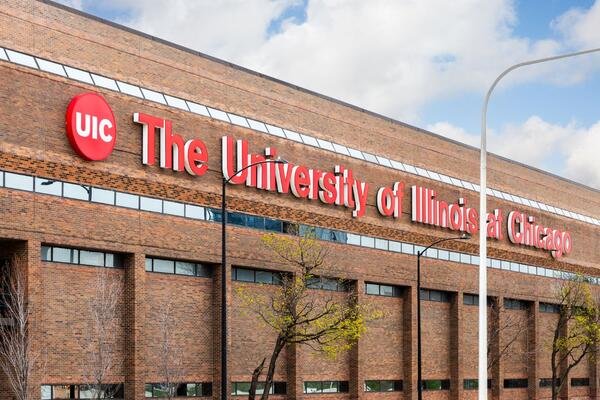
Illinois shows what an alternative policy committed to diversity and inclusion can look like. The state passed a law in 2023 prohibiting book banning; more recently, lawmakers have put forward an academic freedom bill and a proposal to fund public institutions based on student needs. Undergraduate enrollment at Illinois public universities grew 3.7 percent in the 2025–26 academic year, including increases of 9.9 percent (+1,609) among Black students and 9.1 percent (+2,233) among Latino students.
Texas shows the opposite. Texas’s flagship universities cut hundreds of jobs to avoid diversity-related work, and 52 percent of LGBTQ students there have considered leaving their institution; 78 percent have considered leaving the state. The data regarding students and knowledge production follows this pattern throughout the country: For example, a 2026 American Association of University Professors survey of faculty in 13 Southern states found that 59.4 percent would not recommend their state as a place to work, a five-percentage-point rise compared to the prior year, and 19.1 percent do not plan to stay in academia long term.
In the end, attacks on knowledge communities harm both people and democracy. While the data shows correlation rather than causation, it points to an urgent need to build policy that protects institutional autonomy, academic freedom and equity, and to block the policies seen in states like Florida and Texas. This “block and build” strategy will anchor the Alliance for Higher Education’s agenda for the next 10 years.
There are opportunities to accelerate a block-and-build strategy as a result of the midterm outcomes. In states with receptive governors and legislatures, advocates should work to strengthen legal, governance and other safeguards for institutional autonomy, academic freedom and expertise-driven leadership.
Board appointments are a key lever. In Texas, over a dozen university regents’ terms in three systems are set to expire in 2027. Incoming governor Gina Hinojosa will have the opportunity to fill those positions in a way that can support the faculty experience on campus while improving student outcomes.
Still, governors should not fill seats in ways that keep higher education in partisan fights. They should instead select candidates committed to higher education and student outcomes—candidates who understand that curriculum, student support and campus operations belong to the president and their staff. Virginia Gov. Abigail Spanberger took this approach, in line with guidance from the Association of Governing Boards, and it should be replicated.
New Mexico offers another model: Voters just approved an amendment to the state Constitution to establish nominating committees for boards of regents; these committees can give the governor a slate of qualified candidates, helping to ensure experts, not partisan actors, serve on boards. Even where boards stay in their lane, rigorous selection and training of board members, like that from the Center for Strategic and Inclusive Governance, remain necessary.
In this moment of hope for progress, we have the opportunity to be clear about the value and values of higher education and how it strengthens communities across the country. By communicating our values clearly, we will provide concrete understanding of higher education’s purpose and a sense of solidarity in a moment when fear has led to negative outcomes across the country.
Our sector should not become comfortable as a result of the election results. The past four years have shown what can happen when we seek to survive and manage rather than thrive and progress. We have witnessed politicians at the state and federal levels using financial coercion and fear to assert power over institutions in ways that heretofore were generally off-limits. This threat does not dissipate because of the midterm election results. They have opened a Pandora’s box. The threat will be ongoing, and we have to treat it as such.
As we look toward the next decade of possibility for higher education, we must proactively shape its conditions so it can fully realize the role it can serve as a pillar of democracy. We should hold fast to the same ideals that many American leaders, from Benjamin Franklin to Frederick Douglass, have advocated for: that knowledge and freedom are inextricably linked, and so access and attainment are foundational to democracy. All people should be free to learn, contribute, lead and thrive. We have a unique opportunity at this moment to proactively unite around a shared vision for what higher education can be.
Mike Gavin is president and CEO of the Alliance for Higher Education.
Kristin Neff, founder and president of the Compassion Institute, explains why extending yourself the same grace you’d
Greek life has poisoned our campuses long enough.
6 min read
Faculty have lost the power but kept the loyalty. Downton Abbey explains why.
5 min read
For low-income students, the enrollment deposit may come as an unexpected, and prohibitive, expense.
4 min read
Don’t miss a single story
Subscribe for unlimited access to news and opinion.
Create a free account and get higher ed’s most essential news, analysis, and career advice delivered to your inbox.
Copyright © 2026 Inside Higher Ed All rights reserved.
Log in to manage your newsletter preferences.