Increasing Women’s Representation in Politics | CFR Education – Council on Foreign Relations

Take a quick tour of the new website with this short video – watch here
Take a quick tour of the new website with this short video – watch here
How should the United States promote women’s representation in politics? Explore this simulation.
Need guidance for how to run your mini simulation?
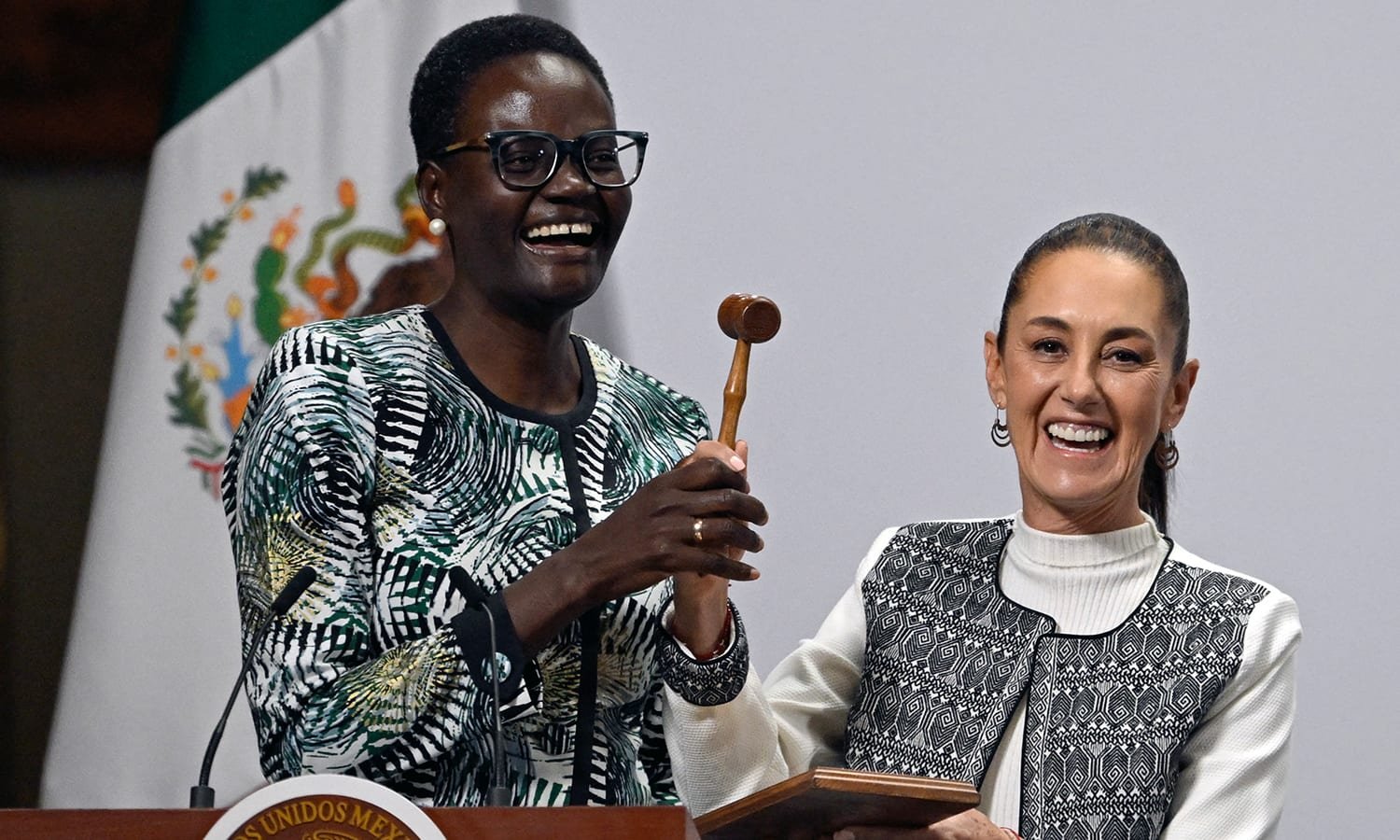
Policymakers have maintained that expanding women’s representation in politics around the world is both the right thing to do and good for U.S. interests. But progress toward equal representation has stalled. How should the United States respond?
Students will be able to describe the state of women’s political representation worldwide and the factors driving current trends.
Students will be able to explain the benefits of increasing women’s political representation for democracy, peace, and stability.
Students will be able to evaluate various foreign policy strategies available to the United States to influence women’s political representation abroad and assess the trade-offs they entail.
U.S. policymakers have long argued that supporting women’s participation in politics is both the right thing to do and good for U.S. interests, as it promotes stability, prosperity, and peace.
When women hold more political power, several benefits can follow. Women are more likely to collaborate across party lines to pass legislation. Governments with more women are more likely to adopt policies promoting social welfare and less likely to respond to crises with violence. Countries with more equal gender representation are more likely to adopt policies enabling women to work and start businesses, leading to economic growth. And in countries experiencing conflict, peace negotiations are more likely to succeed and last when they include women.
Women’s participation in politics has expanded in recent decades. The share of women in parliament more than doubled (to 27.2 percent) between 1995 and 2025. But given that women make up half (49.8 percent) of the world’s population, equal representation remains far away. And progress has stalled. In 2026, women’s representation declined in both cabinet positions and parliamentary leadership. The growth of women’s representation in parliaments overall has slowed to a crawl. In 2024, nearly thirty newly elected parliaments had fewer women than before.
Several factors help explain the slow pace of progress. For one, women generally have less access to the resources and funding that political careers require. For another, they often bear a higher share of unpaid domestic and caregiving work, making it more challenging to participate in politics.
Social bias and stereotypes about women’s abilities as leaders are also significant barriers. A 2023 study found that nearly half the world’s population believes men make better political leaders than women. That bias can discourage women from pursuing political careers, disadvantage them in elections, and shape perceptions of their performance once in office.
In addition, social bias has increasingly manifested in the form of threats, harassment, and violence, both in person and online. One survey found that 76 percent of women in parliaments had experienced violence or intimidation from the public, compared with 68 percent of men. The odds of women experiencing online violence are more than twice as high as they are for men. For many women, the threat of violence has become a powerful deterrent against seeking or staying in political careers.
Various measures can help overcome those hurdles and increase women’s participation in politics. One of the most effective strategies is a quota requiring that a certain number of representatives, cabinet members, officials, or political candidates be women. More than 130 countries have implemented such quotas. Education and civic engagement programs can build girls’ leadership skills and reduce social biases. Candidate training programs—often managed by political parties or nongovernmental organizations—can help women navigate the challenges of running for office. And international organizations can build networks that enable women policymakers to collaborate. A growing number of countries have also passed laws specifically defining and penalizing violence against women in politics.
The United States can support countries in implementing some of those strategies in various ways. Through targeted foreign assistance, U.S. agencies have funded candidate training programs and supported women’s caucuses in foreign parliaments. The United States has also invested in building up civil-society organizations advocating for gender equality and backed research on barriers to women’s political participation. The United States can also work through bodies, such as UN Women, and regional organizations to coordinate with donors, establish shared standards, and amplify pressure for reform.
The United States can also pressure countries to implement reforms. That could include placing conditions on foreign assistance or trade benefits, tying them to specific reforms increasing women’s representation. Policymakers can enact diplomatic penalties, such as withholding high-level diplomatic visits or excluding countries from certain forums. In 2022, for instance, the United States led a successful effort to remove Iran from the UN Commission on the Status of Women following its violent crackdown on women-led protests.
Every strategy involves trade-offs, especially when it comes to countries that partner with the United States on critical issues like combating terrorism or competing with rival powers. Conditions and penalties could apply quick, direct pressure, but they could also cause diplomatic backlash and hinder cooperation on other crucial issues. They could also draw accusations of hypocrisy. The United States is not itself a leader in women’s representation but rather firmly in the middle of the pack.
Other measures such as foreign assistance could generate lasting momentum for reform. But they require willing partners and sustained U.S. investment. And they could have diplomatic consequences too. Policies that seem like well-intentioned support for women’s representation to some could appear as unwanted meddling in a country’s internal affairs to others.
No strategy is guaranteed to succeed, let alone show quick results. Policymakers need to carefully consider what progress they could realistically expect from any strategy and whether it justifies the risks and costs. But they also need to consider the cost of doing nothing. Declining to act could signal that Americans do not take their values seriously, let down activists and politicians who count on U.S. support, and miss opportunities at a moment when progress on women’s representation is weakening.
A new report has documented an alarming decline in both cabinet and parliamentary representation for women globally. The report names more than a dozen countries across multiple regions that have demonstrated sharp declines in women’s representation. Several of those are important U.S. partners on issues including , access to energy resources, and keeping Pacific shipping lanes open. Support for women’s rights and political representation has historically been a stated foreign policy goal for administrations of both parties. The president has therefore tasked the National Security Council (NSC) with recommending a broad policy approach to be announced at an upcoming UN General Assembly session. As they deliberate, advisors will need to consider which approaches could best help reverse the downward trend of women’s representation and weigh those responses against their potential diplomatic or geopolitical consequences.
About Roles & Goals
NSC members should consider the following policy options, either alone or in combination.
This work is licensed under Creative Commons Attribution-NonCommercial-NoDerivatives 4.0 International (CC BY-NC-ND 4.0) License.
Lesson Plans
Mini Simulations
Activities
CFR Education aims to build global affairs literacy by providing free, nonpartisan resources and programming to help high school and higher education students gain the knowledge, skills, and perspective required to navigate today’s interconnected world.
Get CFR Education's newsletter
©2026 Council on Foreign Relations
Other Articles

How FCC newspapers make political endorsements – West Central Tribune