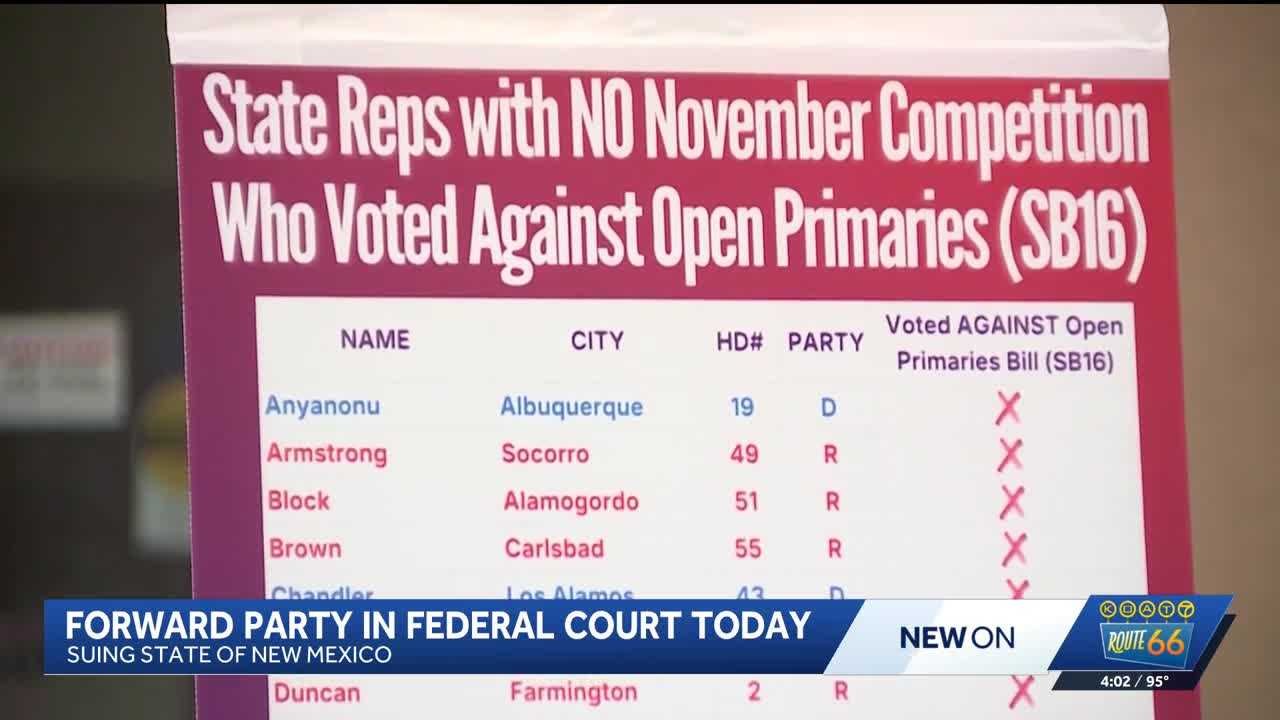
The Forward Party has sued New Mexico in federal court, claiming the state’s ballot signature requirements for minor parties are unfair.
The Forward Party has sued New Mexico in federal court, claiming the state’s ballot signature requirements for minor parties are unfair.
The Forward Party has filed a federal lawsuit in Santa Fe, arguing that New Mexico’s ballot signature requirements for minor parties are inequitable and hinder their candidates from appearing on the November ballot.
The party, which was approved as a minor party in May, is seeking to secure ballot access for its main candidates. Andrew Yang, the party’s founder and a former presidential candidate, visited Santa Fe in April to advocate for voter choice.
"It's that the voters actually have meaningful choices on the ballot and then their leaders have to solve problems and respond to them, and present the case as to why they should be back in office and not count on a lack of competition," Yang said.
The lawsuit focuses on two candidates: Bob Perls, who was running for U.S. Senate, and Michael Vigil, who was running for state auditor. Both failed to qualify for the ballot after they were unable to gather the required number of signatures.
The Forward Party claims the system is unfair, pointing out that Democratic and Republican candidates need about 2,500 signatures, while minor parties like theirs must collect more than 14,000. They also assert that New Mexico is the only state in the nation with such a requirement.
Three of the party’s local candidates successfully turned in enough signatures and will appear on the ballot. However, the status of Perls and Vigil remains uncertain.
In response, the New Mexico Office of the Secretary of State said in a statement, "The law as it relates to the qualification of minor parties is very clear and it was followed when considering the qualification of the Forward Party candidates."
Hearst Television participates in various affiliate marketing programs, which means we may get paid commissions on editorially chosen products purchased through our links to retailer sites.