
Opinion: Students Should Not Rely on Social Media for Political Information – Pepperdine Graphic

Pepperdine Graphic
by

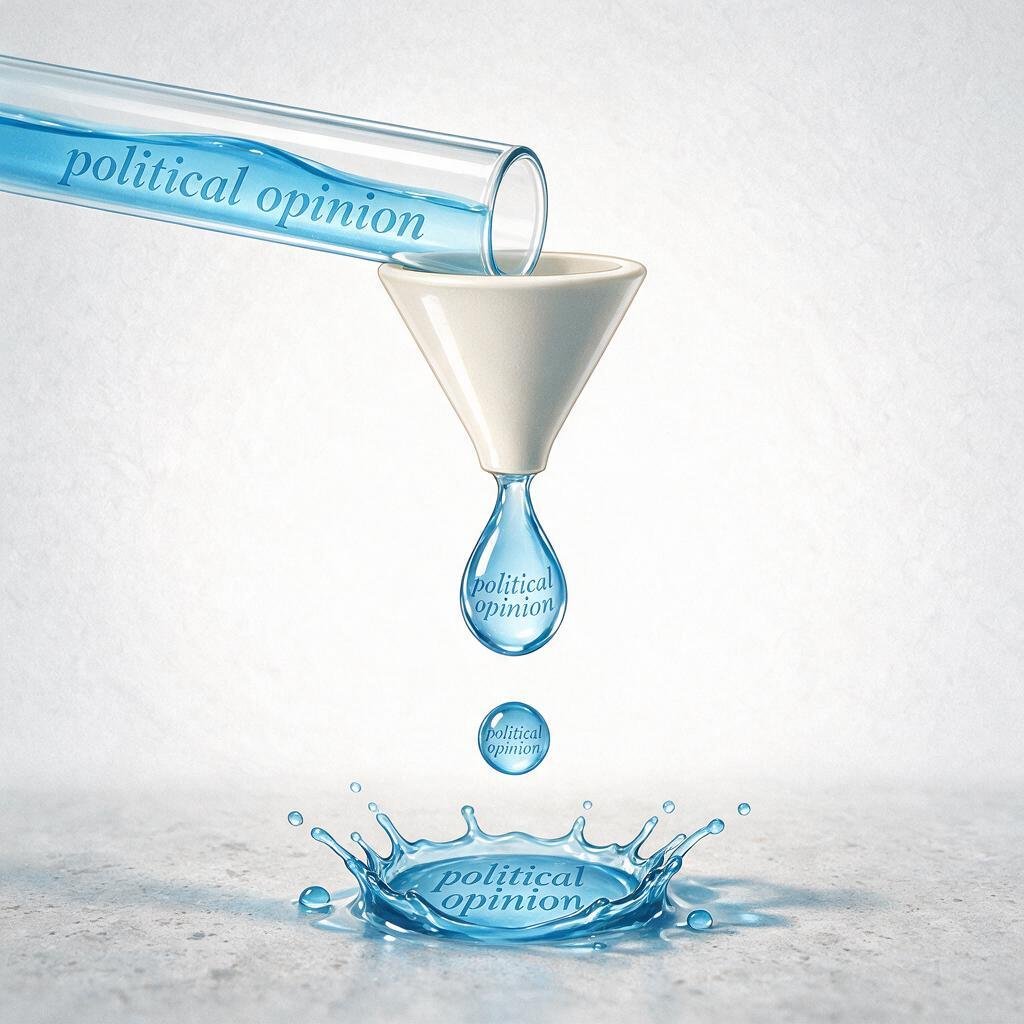
Art by Sofia Cifuentes
Transparency Item: The Perspectives section of the Graphic is comprised of articles based on opinion. This is the opinion and perspective of the writer.
Many college students are exposed to national politics through TikTok, Instagram, Fizz, memes and group chats — even more so than traditional news outlets. An April study found that 57% of teens get their news from social media daily, according to the Media Insight Project.
For decades, youth political participation has been on a continuous decline, but digital platforms have lowered the barriers to political participation, allowing younger generations to participate through online petitions and other forms of online activism, according to “Generational Gaps in Political Media Use and Civic Engagement.”
At the same time, there comes the question of whether students are truly well-informed or just well-exposed. In spite of the recent surge in political engagement, there is still very little political literacy, according to Our National Conversation.
Provocative social media posts promote overly radical ideals, which are increasingly pushed out by algorithms as a method to generate greater profit margins. The goal of these algorithms is to maximize engagement by showing viewers content similar to what they have previously interacted with, regardless of its validity, to keep viewers hooked, according to PBS.
Unfortunately, this layout has attracted a growing number of people hoping to get more upvotes and likes through radical false claims on platforms like Fizz, according to Rice University.
Since the genesis of Fizz, students have used the platform to freely post everything that may pop into their mind, ranging from opinions about their professors to all kinds of online abuse, according to the San Francisco Chronicle.
As a result, universities in Florida and North Carolina have banned Fizz, according to the San Francisco Chronicle. Although there is little organized and collected data on Fizz’s contribution to political issues, there is data regarding similar anonymous commenting platforms.
Anonymous accounts on X have been spreading misinformation regarding the Israel-Gaza conflict, including one account sharing a post that falsely claimed to show a Palestinian crisis actor pretending to be seriously injured, according to the LA Times.
Other anonymous influencers instigate public unrest, falsely claiming that Democrats are encouraging illegal immigrants to replace white people and to commit voter fraud, according to the LA Times.
This shift toward increased political exposure doesn’t necessarily mean youth have increased levels of political participation and engagement. Research indicates otherwise.
There was an observed decline in conventional and unconventional civic/political participation among youth over the span of a 30-year period, according to “Thirty Year Trends in U.S. Adolescents’ Civic Engagement: A Story of Changing Participation and Educational Differences.”
Another study shows that Boomers have the highest level of participation, with the following generations trailing behind, according to “Generational Gaps in Political Media Use and Civic Engagement.”
While legacy news corporations may also present misinformation, bias or censorship, they are subject to strict editorial standards — meanwhile, memes and media posts have no such obligation and thus are more susceptible to error.
While TikTok may be blowing up over Congress passing a new controversial law, very few will learn about the specific language, context, when the law takes effect and all it may affect.
During the 2024 presidential election, President Donald Trump’s online campaign material quickly gained traction. Studies show a decline in the information quality and validity of not just Trump’s material, but the overall Republican Party‘s material as well, according to an article published by PNAS Nexus.
Online engagement with political content, especially in relation to election material, is often won through toxic, polarizing content, with an observed 1.3% increase in engagement, according to the Harvard Kennedy School’s Misinformation Review.
Unfortunately, during events around the 2024 election, including Trump’s conviction, the first presidential debate, the assassination attempt, the Republican National Convention and later debates, different toxic content began to circulate, according to Misinformation Review.
Politicians are also notorious for sharing untrustworthy information through their campaign accounts, especially those in the U.S. Congress, according to PNAS Nexus.
A group chat may circulate a 30-second clip and debate its meaning in minutes, maybe with little-to-no-context, utilizing only their worldviews and political tribalism.
Different people’s political affiliations and environmental biases lead to increased engagement with similar videos, making them more likely to send such types of videos to their friends and colleagues in group chats.
Without the original speech, date, surrounding context and impartial explanation, people might be arguing over an incomplete version of the truth.
That’s the problem with the group chat: Media is rarely consumed in its original form. A news article becomes a screenshot, which gets a catchy caption added and becomes a meme.
Political literacy isn’t about knowing who is in office and the newest White House controversy. It is understanding how political institutions function, where information comes from and how each policy affects its constituents.
Still, there is some merit to political social media use. A student who would have never turned on CNN, NBC or Fox News will still be somewhat aware of what is happening in their city, state, country and world on Instagram. A student who was unaware of the Israel-Gaza conflict could be informed by a creator giving a minute-long summary.
Social media can reduce ignorance by introducing people to issues they may have never encountered otherwise. It can spark curiosity, generosity and perhaps empathy.
Either way, a decline in ignorance still doesn’t entail an informed populace. Misinformation spreads through half-truths and incomplete stories.
Acclaimed Nigerian writer Chimamanda Ngozi Adichie describes the dangers of the “single story” — when a person, place or culture gets reduced to one repeated narrative until that becomes all they are known for, according to her TED Talk.
The same can occur within politics. A politician can be reduced to a single viral speech. A president can become known for one misstep. A policy can be reduced to one negative story or statistic. When one fragment is repeatedly shown, it can start to feel like the whole story.
Students should instead take the initiative to do their own research, read more about the world around them, watch the rest of that speech and fact-check using verified news sources.
Getting into arguments about short-form political videos or memes without the entire context is ineffective and impractical. Instead of propagating online toxicity, take a minute to evaluate the content and be beacons of truth.
___________________
Follow the Graphic on X: @PeppGraphic
Contact Abby Samuel via email: abby.samuel@pepperdine.edu or via Instagram: @abbywrote
Filed Under: Perspectives

Other Articles

Reform council leader: 'Climate emergency was gesture politics' – BBC