

Critical political opinion
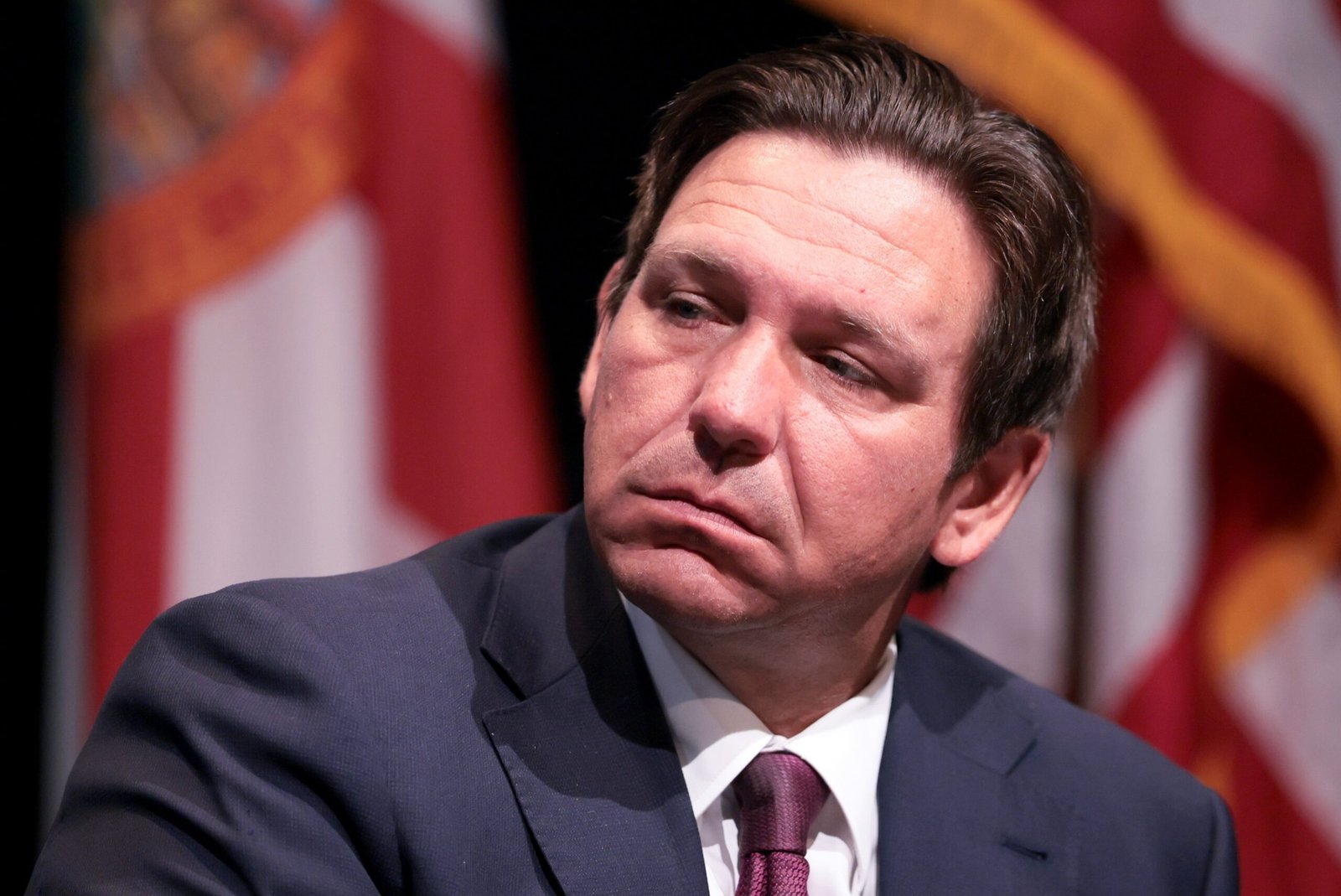
Ron DeSantis built his national reputation by presenting himself as a disciplined conservative leader who could move beyond Donald Trump. Instead, the final chapter of his governorship has left many Floridians with a different impression: a politician who borrowed heavily from Trump’s style and priorities, then struggled to explain what made his leadership distinct.
That is the central problem with DeSantis’ political legacy. He wanted to be seen as the successor who could deliver Trumpism without Trump’s chaos. But when the governing model produced controversy, lawsuits and relentless political conflict, the distinction became harder to see.
From challenger to follower
DeSantis’ national ambitions depended on convincing Republican voters that he was ready to lead the movement rather than follow it. His presidential campaign attempted to make that case, but its collapse weakened the image of independence he had spent years building.
After leaving the presidential race, DeSantis remained closely associated with Trump and the broader Republican agenda. That alignment may have been politically practical, but it also created a damaging question: was DeSantis ever prepared to lead on his own, or was he mainly trying to inherit a political machine he did not control?
A leader can share policies with a party leader without becoming a political understudy. The criticism of DeSantis is that he too often appeared to choose loyalty and tactical positioning over an independent governing vision.
Florida became a national political laboratory
DeSantis turned Florida into a national test case for aggressive conservative policy. His administration pursued high-profile battles over education, immigration, public institutions, local authority, corporate regulation and cultural issues.
Supporters viewed those policies as proof that a governor could challenge powerful institutions. Critics saw a state government consumed by national political messaging while practical problems such as housing costs, insurance prices, health care access and affordability remained difficult for many residents.
The result was a governing style that generated headlines, political loyalty and legal challenges. Lawsuits are not automatically proof that a policy is unlawful or unsuccessful, but a long list of legal disputes can still raise questions about judgment, drafting, priorities and whether officials treated litigation as a predictable cost of political theater.
The cost of being a political yes man
DeSantis’ critics increasingly describe him as a politician who followed the strongest force in the room rather than setting a durable example of his own. That criticism is especially damaging because his presidential campaign was built around the promise that he could be more effective than Trump.
If DeSantis adopted or defended unpopular Trump-aligned policies in Florida, then the political cost belongs to him as well. A governor cannot claim full credit for policies when they are popular and shift responsibility to Washington, party leaders or political opponents when they produce backlash.
Leadership means accepting responsibility for the consequences of decisions. It also means knowing when to disagree with allies. DeSantis’ problem is not simply that he worked within the Republican Party. It is that his public image often suggested that he was willing to follow the party’s preferred script even when doing so weakened his own claim to independence.
Diversity and the limits of a narrow political coalition
DeSantis’ political coalition was powerful, but it was also narrow in tone and often dismissive of the communities and institutions that did not fit his preferred narrative. A state as large and diverse as Florida needs a governor who can represent more than one ideological faction.
That does not mean a governor must abandon principles to satisfy every constituency. It means governing requires listening beyond the most loyal supporters, building broader coalitions and recognizing that disagreement is not disloyalty.
DeSantis’ failure to broaden his political appeal cost him nationally. His attempt to remain relevant by staying close to Trump did not solve that problem. Instead, it reinforced the image of a politician whose ambitions exceeded his ability to build trust outside a partisan base.
What the lawsuits and controversies reveal
Florida’s legal disputes during the DeSantis era should be judged case by case. Some claims may succeed, some may fail and some may be resolved without changing policy. But the accumulation of lawsuits and institutional conflicts reveals a governing philosophy willing to move first and deal with the consequences later.
That approach can produce fast political victories, but it can also create instability. Businesses, schools, local governments and residents are left to navigate rules that may be challenged, revised or replaced. The public pays for that uncertainty through legal costs, administrative disruption and declining confidence in government.
DeSantis may argue that conflict was necessary to accomplish his agenda. The opposing view is that a more effective leader would have pursued durable policy rather than treating lawsuits and cultural confrontation as evidence of success.
Why the presidential argument failed
The DeSantis presidential bid exposed a gap between executive control and national leadership. Running a state government allows a politician to set the agenda and use the power of the office to dominate the news cycle. A presidential campaign requires persuasion, coalition-building and the ability to connect with voters who do not already agree.
DeSantis never fully answered why voters should choose him over Trump. His attempt to present himself as a more organized version of the same movement left him vulnerable to the original. In the end, he looked less like the leader of a new political era and more like a candidate asking for permission to inherit someone else’s.
The lame-duck verdict
Calling DeSantis a lame-duck governor is not only about term limits or the approach of a successor. It is about political authority. A governor becomes vulnerable when the public sees the officeholder as focused on the next role, the next endorsement or the next national opportunity rather than the immediate needs of the state.
DeSantis still has formal power, but his political leverage is diminished when his national ambitions have failed, his successor represents continuity and his relationship with Trump has not produced the influence he wanted.
The result is an uncomfortable legacy: a governor who had the opportunity to become an independent national leader but instead became identified with the role of Trump’s ideological understudy.
Conclusion
Ron DeSantis was not ruined by one policy, one lawsuit or one political loss. His decline came from the gap between the leader he claimed to be and the follower voters increasingly saw.
He promised strength, independence and disciplined conservative leadership. What Florida and the country often received was a politics of permanent conflict, narrow coalition-building and loyalty to a national figure whose influence he wanted but could not control.
That is why DeSantis’ record deserves critical review. The issue is not whether every policy was wrong. The issue is whether he used the power of the governorship to build a durable, inclusive and accountable model of leadership.
So far, his record suggests something else: a politician who was most comfortable as a sidekick to a larger personality, not as the independent leader he promised to become.
Editorial note: This is political commentary. Lawsuits, policy outcomes and any future impeachment proceedings should be evaluated through official records and reputable reporting. A political prediction or allegation is not an established fact.
Other Articles
Fralin: The middle ground voters – Cardinal News