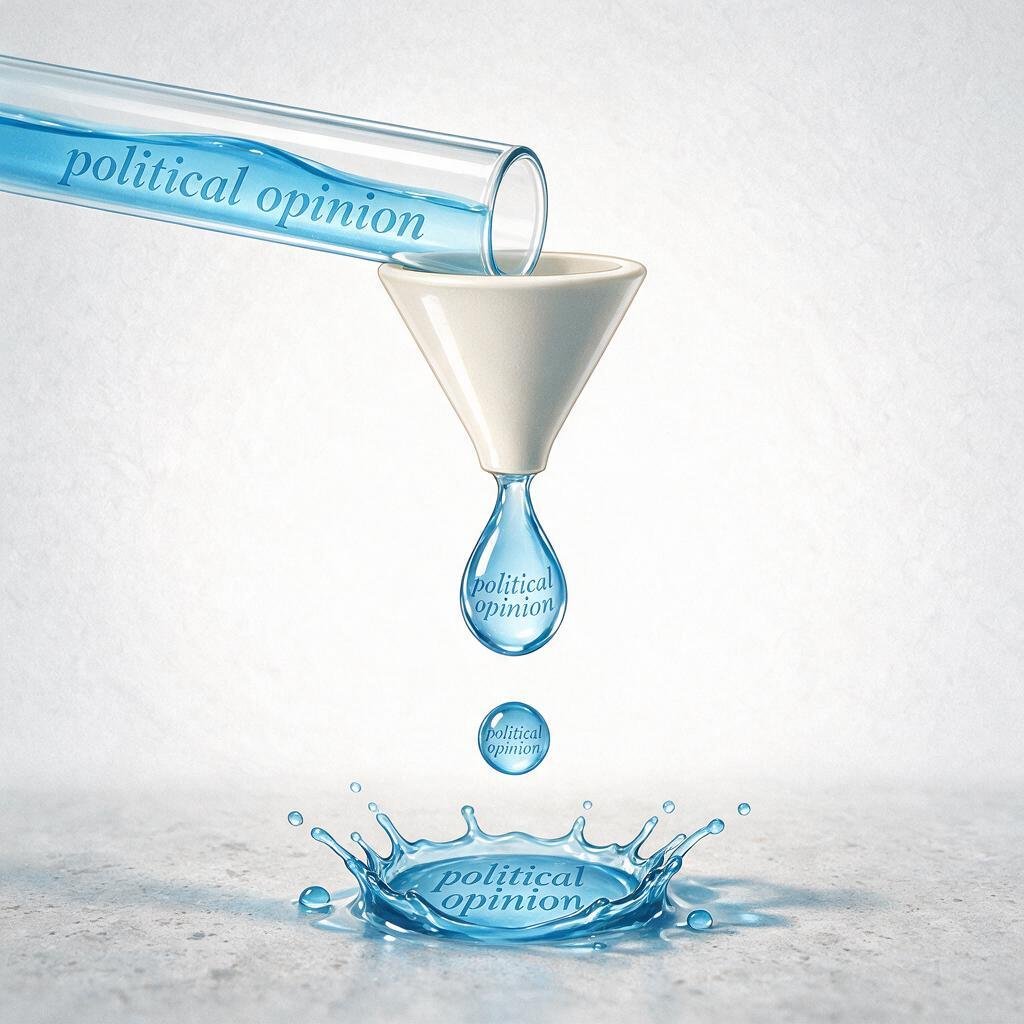

With one month until the midterm elections, Americans must confront a deeply divided political system and growing ideological tensions. College students remain uniquely positioned to explore, rather than avoid, this political reality. That opportunity is worth preserving now more than ever.
Students living away from home for the first time experience many new opportunities, and political engagement is no exception. As each undergraduate navigates this newfound independence, they are free to build an original political identity and develop their own civic education.
They also appear to diagnose the state of contemporary politics differently than Americans at large. An August 2026 Gallup public opinion poll asked Americans to identify the most important problem facing this country today. Most respondents pointed to the economy, immigration and government leadership as top concerns. Just 3% of them mentioned political division.
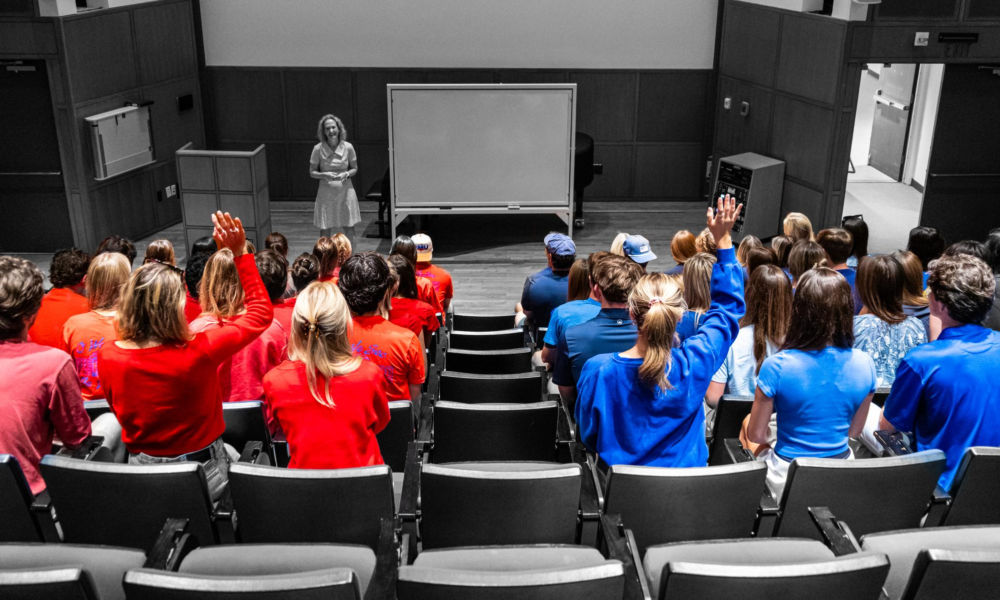
Sara Johnson, a professor at SMU’s Department of Political Science, posed that same question to her Introduction to American Government and Politics class at the beginning of this semester. She asked each student to write about the biggest problem facing America today.
“It really was almost 100% [of] people saying the biggest problem is political division,” Johnson said. “Almost unanimous.”
While most Americans are caught up in Washington D.C.’s political pandemonium, SMU students see a need for agreement. Johnson said her students see division reshaping their interactions with friends and family, and pointed to , what they described as , a growing inability to have discussions without disagreement.
But as students face a modern political machine, armed with enormous influence and funding, Johnson said students have continued to grow reluctant to discuss their beliefs in class since she began teaching at SMU in 2020. As national politics have become more divisive and, in her words, “meaner,” reaching across the aisle has become harder.
“The fear [for students] is that if I speak up in real life, maybe I’ll get the same kind of mean reaction that I see other people getting on social media,” Johnson said.
In much of today’s political environment, exploring or reconsidering one’s political identity simply comes with too great a risk. College remains a place that young Americans can do so anyway.
Professor Johnson’s undergraduate students are mostly 18 to 22, an age when one’s political beliefs are still forming and evolving. This makes campus life an opportunity for growth at a significant stage of development. Students are inherently exposed to unfamiliar viewpoints from roommates and friends whose influences may be extraordinarily different from their own.
The experience of adapting and adjusting to college begins to reshape perspectives long before students ever reach the classroom, paving the path for understanding.
“They are already doing that naturally before they come to my classroom,” Johnson said. “I feel like people are ready to learn about other ideas and be challenged.”
A classroom structure, however, can carefully guide those discussions in a way that the rest of campus cannot. For her Introduction to American Government and Politics students, Johnson said she frames the course academically, examining what might work rather than who is right. It’s an approach that she said enables students to consider differences carefully, without getting personal, and without too much pressure.
By detaching policy from the party that endorses it, students have a real opportunity to evaluate their own priorities and cultivate a political identity.
William Wright, a sophomore public policy major, described this effect while recalling his class with Professor Johnson last year. For an end-of-semester project, Wright found himself paired with a group of students whose politics differed significantly from his own.
“It’s about bringing the issues back down to the issues, as opposed to bringing it to Democrat versus Republican,” Wright said.
Outside the classroom, that responsibility falls onto students themselves, and it’s something that affects everyone if they aren’t careful. With the advent of social media, even Professor Johnson can find it difficult to avoid partisan news coverage, or determine what information is newsworthy at all.
“Every time I open my phone, I’m getting fed something that the algorithm thinks I will see,” she said. “It’s crazy how often we’ll have a very different idea of what’s going on.”
— Professor Sara Johnson
“Every time I open my phone, I’m getting fed something that the algorithm thinks I will see,” she said. “It’s crazy how often we’ll have a very different idea of what’s going on.”
Some students are finding ways to navigate partisan reporting on their own. Wright said he uses AI to filter political bias out of his daily news. Every morning, the AI automatically cross-references headlines from several major newspapers, checking for consistency across outlets. It brings him accurate reporting from a range of sources while simultaneously flagging opinionated language or skewed coverage.
On Nov. 3, the day of the midterm elections, that effort gets tested. Texas will vote to decide a Senate race between Republican Ken Paxton and Democrat James Talarico, a strongly contested matchup that is drawing heightened national interest.
Most election polls indicate the race could be a tossup, with an Emerson College/Nexstar Media survey reporting 47% support among voters for Paxton and 46% for Talarico. In the May primary election, Ken Paxton defeated longtime incumbent Sen. John Cornyn and ended his fifth bid for reelection. Now, Texas plays host to a major political battleground that could change the outcome of November’s national midterm elections.
Compared to a presidential election, a midterm poses new challenges for Americans looking to cast their ballots. The question is not who occupies the White House, but instead, which party controls the legislative process for the next two years.
Despite the strategic significance of a midterm election, Professor Johnson said students are often less knowledgeable about their purpose or their impact on policy. Her class will spend weeks studying Congress this semester in preparation for Election Day, but many students on campus are on their own.
Still, Professor Johnson believes the most useful thing that people can learn does not require a class at all.
“You don’t have to have a counterpoint to everything,” she said. “You can just ask sincere questions and then truly listen to the answers.”
Come Nov. 3, many students will cast a ballot for the first time. That’s a big decision for young adults still navigating life away from home, and there’s a lot to unpack there. For Wright, that was the moment when politics became real.
“That was my shift,” he said.
For thousands of students at SMU this fall, politics are becoming real. They’re no longer being asked what they think. For the first time ever, the question is: What are you going to do about it?