The Voter as Estimate: What Commercial Profiles Miss About Independent Citizens – The Fulcrum

Opinion
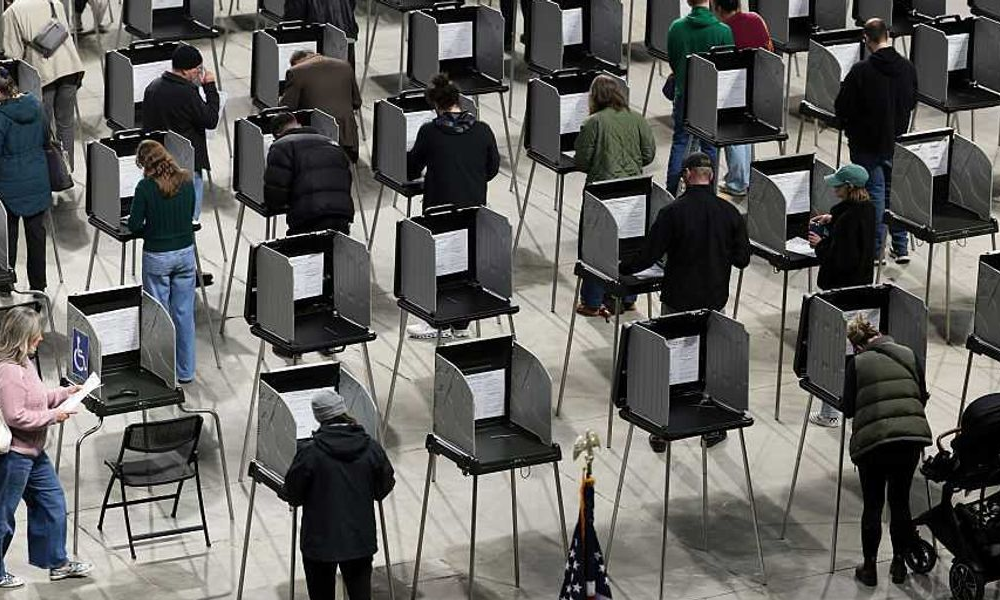
Voters cast their ballots on Election Day at the Cross Insurance Center polling location on November 03, 2026, in Bangor, Maine.
In the late 1980s, when my firm, Price Research, prepared a voter survey for the Bakersfield City School District, we began with a basic administrative record from the Kern County elections office. To clean up addresses and append phone numbers, we turned to Political Data Inc. (PDI)—then a young company operating out of two converted dressing-room trailers on the Warner Bros. lot in Burbank. PDI helped us find and organize voters. But to learn what those citizens actually thought about school facilities, taxes, and local bonds, we still had to do something simple: we had to ask them.
Today, that basic administrative list has become the foundation of a multi-million-dollar commercial enterprise. Major vendors such as L2, TargetSmart, Aristotle, i360, and Data Trust assemble public records into vast dossiers, appending anywhere from 600 to over 2,500 individual data points per record—income estimates, housing specifications, vehicle makes, magazine readership, firearm licensing, travel habits, and predictive behavioral scores. What began as a tool for locating voters has evolved into a system for estimating them.
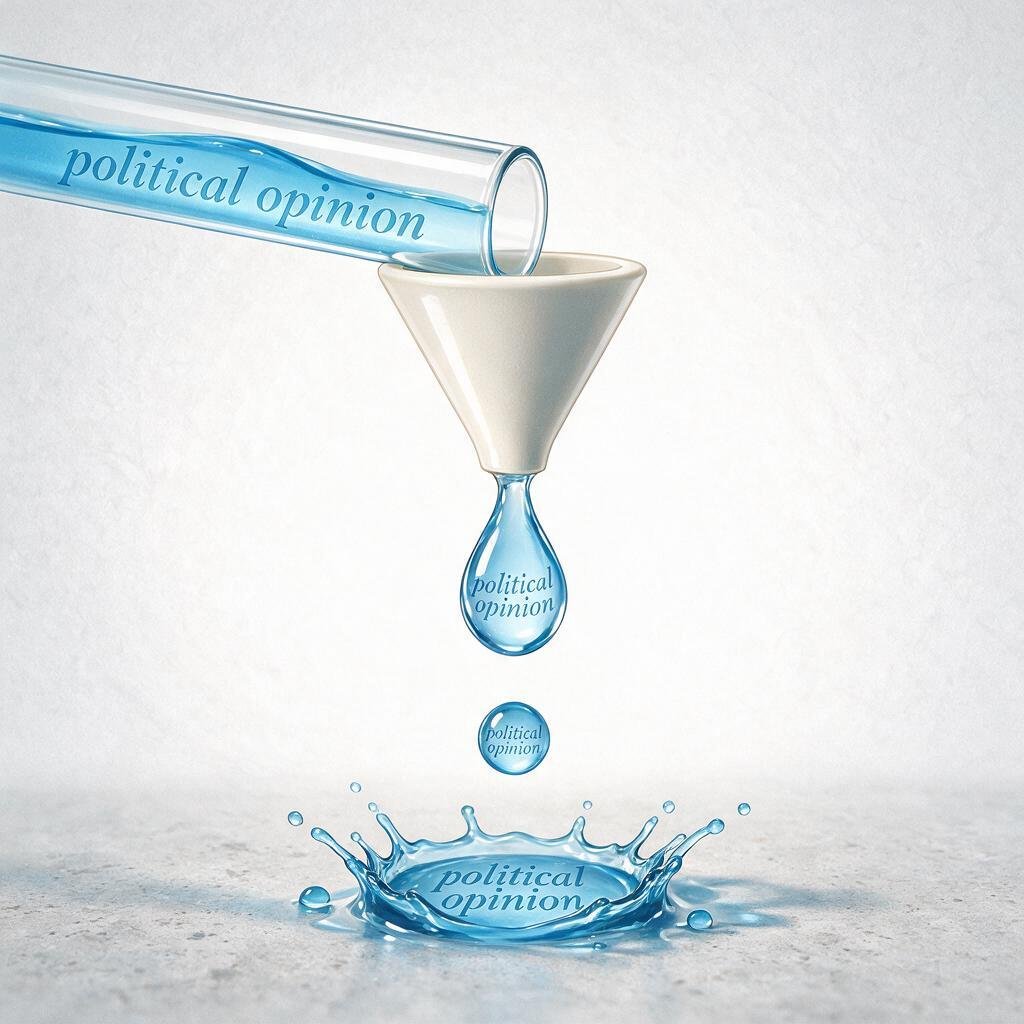
This evolution has created an acute democratic tension. Citizens register to vote to exercise a civic right. Few realize that this single public registration record becomes the anchor for a commercial profile packed with data they never provided and political judgments they never expressed. The public nature of a voter roll should not place commercial inferences beyond civic accountability.
Two Different Kinds of Information
Modern voter files conflate two fundamentally different categories of data:
One measures a verified civic act; the other constructs a commercial prediction. Because the secret ballot protects actual choices, official records show how often a citizen participated, but never how they voted. Everything else—including candidate scores and ideology rankings—is simply a vendor’s educated guess.
According to federal Election Assistance Commission data, more than 40 percent of voter registration transactions now occur through routine "Motor Voter" interactions at state DMVs. Completing that errand does not mean a citizen understands how their record will be enriched, nor does it provide them any mechanism to inspect the resulting profile. Political organizations routinely purchase and act upon commercial claims about citizens, while the citizens themselves are denied any opportunity to review or challenge them.
Independent Voters and the Fallacy of Binary Modeling
Independent voters expose the flaws of this machinery most clearly. Gallup’s long-term polling found that 45 percent of U.S. adults identified as political independents in 2025. While many lean toward one party, they deliberately claim an independent identity; for them, leaning preferences and independent self-conception coexist.
These self-identified independents overlap with—but are distinct from—formally registered unaffiliated voters. Under Oregon’s automatic voter registration system, for instance, citizens are registered as nonaffiliated unless they affirmatively select a party. Others deliberately opt out of party registration. Neither path reveals where they stand on specific candidates or ballot measures.
Yet an official registration marked "unaffiliated" routinely acquires a commercial label of "likely Democrat" or "likely Republican." That label then dictates whether and how campaigns engage the voter.
Consider an unaffiliated voter in Colorado who typically votes Republican but strongly favors a local school bond. A commercial algorithm branding them "likely Republican" may lead a bond campaign to write them off entirely. Conversely, an unaffiliated voter who leans Democratic might oppose a municipal tax measure; if partisan lean is treated as a catch-all proxy for policy stance, campaigns will miss the specific concern driving their vote.
A flawed estimate does more than waste ad dollars. It sidelines citizens from civic outreach or subjects them to appeals built around beliefs they do not hold. Most never discover why they were targeted—or ignored.
From Polling People to Predicting Them
At Price Research, we specialized in California school bond and tax measures governed by the state’s stringent two-thirds approval requirement. Survey inference was central to our work, but an answer supplied directly by a voter and a conclusion drawn by an analyst remained fundamentally distinct. We asked voters about project priorities, tax thresholds, and counter-arguments before revisiting the ballot question. Even voters who shared an initial response rarely arrived at it for the same reason. "Undecided" reflected a temporary position, not the underlying values shaping it.
Modern political analytics operates on an entirely different scale. As political scientists David Nickerson and Todd Rogers noted in their landmark 2014 study on campaign big data, survey responses from 1,200 individuals are routinely leveraged to project preferences onto millions of voter records. The 1,200 supply real answers; the millions receive algorithmic assignments. That statistical scaling is technically impressive, but it is no substitute for democratic dialogue.
Empirical research reinforces why independent voters defy simple modeling. A North Carolina study by J. Michael Bitzer, Christopher A. Cooper, Whitney Ross Manzo, and Susan Roberts revealed that unaffiliated registrants consistently differed from major-party registrants in both attitudes and voting behavior. Among more than 207,000 unaffiliated voters who participated in three consecutive presidential primaries (2012, 2016, and 2020), nearly half—47 percent—voted in different parties' primaries across those cycles. While primary participation does not dictate general election behavior, it demonstrates an electoral fluidity that static party-lean scores in commercial voter files invariably blur or erase.
Similarly, a 2026 study by Philip Moniz, Kyle Endres, and Costas Panagopoulos confirmed that commercial policy predictions deteriorate rapidly when a voter’s views diverge from orthodox partisan lines. While their study excluded nonaffiliated voters and thus did not prove independents are uniquely unpredictable, it demonstrated that partisan heuristics are unreliable guides to specific policy views.
Data vendors themselves recognize these vulnerabilities. A GoodParty.org campaign guide cautions candidates to validate commercial scores through real door-to-door conversations. That is sound advice for the campaign buyer; the profiled citizen deserves a fair mechanism to inspect those claims as well.
Giving Citizens a Voice in Their Dossiers
Campaign access to public voter files and vendor accountability to the electorate need not be mutually exclusive. States can balance both by explicitly bringing commercial political data brokers under state consumer data privacy frameworks. Such rules should apply strictly to commercial vendors licensing compiled dossiers to multiple campaigns, leaving internal party and volunteer databases distinct.
A clear precedent already exists. In a 2022 formal opinion, the California Attorney General affirmed that qualifying inferences drawn by a covered business fall under the California Consumer Privacy Act’s (CCPA) "right to know"—even when those inferences stem from public records. This precedent provides a legal framework for treating commercial inferences separately from the public voter rolls used to generate them.
A comprehensive, administratively feasible transparency framework—mirroring consumer data protection standards in credit and employment reporting—should establish four baseline standards:
Vendors can satisfy these requirements by disclosing general modeling methodologies and input categories without disclosing proprietary source code or model weights. State privacy regulators already oversee similar disclosure standards across credit and employment reporting.
Accountability to the Citizen
These protections will not eliminate campaign missteps or stop every targeted political ad. They will, however, give citizens a practical mechanism to inspect and challenge consequential commercial assertions made about their civic lives.
Forty years ago, the administrative voter file was used simply to locate citizens so campaigns could talk to them. Today's commercial dossiers decide what to expect from citizens—and whether they are worth talking to at all. That shift demands accountability not just to the political clients buying the data, but to the sovereign citizens described within it.
Independent voters do not need to be easily predictable to deserve democratic respect. Americans deserve to be engaged as citizens who can speak for themselves, not as commercial estimates engineered to speak for them.
Kent C. Price is a retired political science professor with four decades of experience in applied public‑opinion research, including extensive work on large two‑thirds revenue elections in California.
U.S. Senator Barack Obama (D-IL) attends a campaign rally, February 28, 2008, in Fort Worth, Texas.
In 2008, Barack Obama, then a young Senator from Illinois, ran for president proclaiming he was “fired up and ready to go” and promising “hope and change.” He made the cover of Vibe magazine, the first politician ever to do so.
Obama’s photo ran under the headline “It’s Obama Time.”
As Duke University Law Professor Jedediah Britton-Purdy explains, Obama had “a redemptive version of American politics… Both in his campaigns and in the public-facing aspects of governing, he insisted on common principles and the possibility of a shared perspective. His persistent refrain, from the career-making speech at the 2004 Democratic National Convention to the elegiac address after the Dallas murders of 2016, has been that unity is deeper than division.”
His election electrified the country.
Eight years later, the United States took a dark turn, seemingly turning its back on Obama’s vision and his hope-and-change vibe. Instead, the country seemed to embrace resentment and a rejection of everything that the election of Barack Obama stood for.
On November 3, it took a step back from the abyss.
The results of the 2026 midterms are already being described as a rejection of Trump and Trumpism. They are that, but they are something more.
They are a reaffirmation of Americans’ attachment to democracy and of our unwillingness to relent in the face of Trump’s assaults on it. In 2024, we ordered up a serving of authoritarianism.
The 2026 results indicate that Americans didn’t like its taste. We said no to the brutality of ICE; no to rampant corruption, no to racism and bigotry, no to endless wars and an economy that serves the 1% and few others.
But they are more than that. The results produced a series of firsts, barriers broken, new possibilities glimpsed.
In Michigan, confronted with JD Vance’s Islamophobia, Abdul El-Sayed urged voters to choose “hope over hatred.” And they did.
In Obama-like fashion, El-Sayed used his victory speech to sing the praises of inclusion and diversity. “As I was campaigning,” he said, “some of you would come up and ask, ‘How come you don’t hit back? How come you don’t call them racist or hateful?’“
“They weren’t targeting me,” El-Sayed added. “They weren’t just attacking me. They were targeting and attacking you. They were targeting and attacking the very idea of America….They want an America that is too small for some of us. We know that America is big enough for all of us.”
One thousand miles to the south in Texas, James Talarico gave his victory speech at a podium adorned with the slogan “Love Thy Neighbor.” He reminded his audience that “In this state and this country, power belongs to the people.” He compared himself to the biblical character David facing down Goliath, saying, “David had hope. He had faith….Scripture has taught me, my own life has taught me, always bet on the underdog.”
He observed that the attacks on him were “the final howls of a dying establishment….We united Texans of all backgrounds and all faiths…who were fed up and ready for change…”
El-Sayed, a left Democrat and a Muslim, promising to put money in people’s pockets and Medicare for All; Talarico, a devout Christian, with a more soothing style, both offered hope and promised change.
And lest there be any doubt about the Obama vibe that infused the 2026 election, the former president brought it to his campaign appearances for both El-Sayed and Talarico.
After those appearances, University of Virginia Professor Barbara Perry observed, "Democrats have found their true spokesperson for the midterms."
Whether Obama’s appearances made a difference or not, the message he delivered in 2008 certainly seemed to resonate with voters fed up with doom and divisiveness.
And just as in 2008 when Obama became America’s first black president, the 2026 election delivered its own share of historic firsts.
With the Democratic takeover of the House of Representatives, Hakeem Jeffers is poised to become the first Black Speaker of the House of Representatives. He showed his political mettle by insisting that Democrats focus on affordability in the 2026 campaign and promising that under his leadership, the House “will be hyper-focused on driving down the high cost of living.”
Everywhere, it seems voters were not distracted by the usual attacks on Democratic candidates' identities.
As a result, El-Sayed will be the first Muslim to serve in the United States Senate. He will be joined by New Hampshire’s Chris Pappas, who will be the first openly gay member of that body. He highlighted his gay identity by talking lovingly about his husband.
He promised to go to Washington as part of “a new generation” determined “to fix things."
Peggy Flanaghan, Senator-elect from Minnesota, will be the first Native-America senator in US history. Annie Andrews will become the first woman to be elected to the Senate from South Carolina.
At the state level, Keisha Lance Bottoms is the first Black to be elected governor of Georgia and the first woman to be chosen for that office in Georgia. Bottoms will also make history as the first female Black governor in US history.
Like El-Sayed and Talarico, Bottoms used her victory speech to evoke the spirit of Obama when she said, Georgia, “We sent a message loud and clear that we want a leader who will put Georgia first and who will stand up to all the chaos coming out of Washington, D.C. But even more importantly, you sent the message that in these times of division and acrimony, you believe in something foundational, and that is hope.”
Texas voters chose a Hispanic woman, Gina Hinojosa, as governor, another first. Evoking an Obama-like call for unity, she said, “Let me be clear: we did not end one era of single party rule just to usher in another…The same national pundits and political class who ignored and then misunderstood this campaign will declare this a victory for Democrats. They continue to misunderstand.”
And in another first occurred in New Mexico when Deb Haaland was elected the first Native American governor of her state, and first female Native American governor in US history.
President Trump reacted to the election result with deflection and denial. “I don’t like to consider it a defeat for me. I wasn’t on the ballot,” he said, “after campaigning for two months telling his supporters at least 41 times to ‘pretend I’m on the ballot.’”
“No matter how good the president is, you lose.”
Trump lost, but America won. We can feel hope that the November 3 results signal the beginning of the end of the Trump era.
However, even as we remember how much work remains to preserve American democracy, we should recognize that the 2026 midterm election was a good start.
Austin Sarat is the William Nelson Cromwell professor of jurisprudence and political science at Amherst College.
Election Day in America
Today, voters in Lexington, Kentucky will decide whether ordinary residents should have a permanent role in reviewing the rules of their local government. If approved, an assembly made up of residents selected by lottery would review the city charter at least every eight years, giving everyday people a recurring opportunity to examine how Lexington is governed.
It's a significant proposal, and one that could put our Kentucky city at the forefront of democracy reform in the United States.
But, to me, how our community got here is just as interesting as the proposal itself, and it might mean a lot for how our country approaches democracy reform more broadly.
In 2017, we launched CivicLex as an experiment in helping residents better understand the complicated civic issues that shape Lexington. In the years since, our work has grown to include a local newsroom, youth civic education programs in every county high school, and programs that help neighbors connect with one another. We've also spent years working alongside local government to rethink the public's role in major decisions, from making public meetings more accessible to reimagining how boards and commissions operate.
A few years ago, several members of Lexington's Urban County Council approached us about leading a review of Lexington's Urban County Charter – essentially, our local constitution. That document dates back to the merger of Lexington and Fayette County in 1974, itself a democratic innovation for the time, and hadn’t been reviewed since 1998.
We weren't sure we wanted to take on the first review in more than two decades.
City charters are complicated. Most people don't spend much time thinking about the rules that govern their local government, so traditional public engagement approaches aren’t particularly well-suited to the task. And because any changes would ultimately need to go before voters, we needed a process that people could understand and trust.
Around this same time, through our engagement with national and international networks, we started learning about citizens' assemblies. Their representative yet randomized selection process offered an alternative to the typical "blue-ribbon" task force. Their extended, deliberative nature gave residents time to learn about complicated issues, hear competing perspectives, and work toward recommendations together.
The more we learned, the more we thought an assembly might be the right tool for Lexington.
So, we decided to do it.
But we also made another decision that would shape the project: rather than bringing in an outside organization to run the Assembly, we wanted to see whether we could organize it ourselves.
We spent three years raising money, planning the process, and engaging our community about what parts of the charter should be reviewed. We organized and funded the project independently of local government, working with Lexington residents as advisors and asking Council to commit to receiving and meaningfully responding to the recommendations.
In March of this year, we brought together 30 Lexington residents selected through a representative lottery. We mailed invitations to 10,000 randomly selected addresses and, from those who applied, used a lottery system to choose a group that closely reflected our community across political registration, race, age, education, income, and more. Over seven sessions, this group spent more than 30 hours learning about local government, hearing testimony, deliberating, and developing recommendations about our city charter.
The Assembly ultimately advanced three proposed reforms supported by supermajorities of more than 84%: increasing Councilmember compensation to the average annual wage in Lexington, creating publicly viewable Councilmember accountability standards, and reviewing the charter at least every eight years through a recurring citizens' assembly.
All three of those recommendations were advanced by Council to voters as ballot amendments in this November's election.
If adopted, one of those amendments would make assemblies a permanent part of our city charter, creating a recurring opportunity for residents to review the rules of our local government.
One of the reasons we were able to pull this off was that we’d already spent nearly a decade working alongside residents and local government in Lexington. While we couldn't have organized the Assembly without the research and resources of national and international organizations in the assembly space, even more fundamental to our success were the relationships, experience, and understanding that we’d already built in our community.
Place-based work can’t be easily reproduced or scaled. It depends on mutual trust and accountability that is built over years by showing up for your community over and over and listening to their needs. And, of course, our work didn't end when the Assembly did. We'll run into participants at the grocery store. We'll be working with Council long after November. And we'll remain accountable to our neighbors in a way that's difficult to replicate from somewhere else.
I think this type of proximity is important for us to think about as we consider how to renew civic life in America. We spend a lot of time asking how to bring promising innovations like citizens' assemblies and participatory budgeting to more places. All important work. But I wonder if we're missing another, more fundamental question: how do we help communities develop the relationships, resources, and institutions to decide for themselves what they need?
Lexington's Assembly didn't start with someone looking for a place to organize a citizens' assembly — it started with trying to solve a problem in our community, and we found a process that made sense for it. In another community, with different needs and relationships, the right response might look entirely different.
If we're going to strengthen our country's culture of self-government, embracing the complexity of place-based response to challenges is essential to making sure we get it right. No one-size-fits-all solution, no silver bullet. What works in one community may not work in another, and we can't simply reproduce a process and expect the same results. But, we can invest in the people and institutions in place that allow communities to find their own ways forward.
Kentucky may not be the first place people look for the future of American democracy. But from the merger of Lexington and Fayette County in 1974 to the proposal now before our voters, our community has a history of taking its own future into its hands.
On November 3, Lexington voters will decide whether to make assemblies a recurring part of that history. I hope the country pays attention to that vote. But I hope we pay even more attention to the conditions that made it possible, and what it might mean for other communities looking to shape their own future.
Richard Young is the Founder & Executive Director, CivicLex. and is a Visiting Fellow, SNF Agora Institute at Johns Hopkins University.
The 2026 midterm elections are finally here, and campaigns are still consumed with a familiar question: Who will voters support? While this may seem obvious, another question may matter just as much: Will they vote at all?
Americans are hardly indifferent about the economy. A July Pew Research Center survey found that economic issues were, by a wide margin, what registered voters most wanted congressional candidates to discuss. Twenty-nine percent spontaneously identified an economic issue, with affordability and the cost of living leading the list.
The concerns are easy to understand. Only 24 percent of Americans rated national economic conditions as excellent or good. Sixty-nine percent said they were very concerned about health care costs, 66 percent about food and consumer goods, 64 percent about housing, and 56 percent about gasoline. These numbers tell us what people worry about, but they do not tell us what those people will do on Election Day. That is where voter fatigue enters the conversation.
People tend to assume that an unhappy voter is a motivated voter. Sometimes that is true, and economic frustration can drive people to the polls to demand change, reward one party or punish another. But frustration can also run in the other direction.
A voter who has heard campaign promises election after election, watched partisan battles consume Washington and still struggles to pay the mortgage or grocery bill may not become more politically engaged. That voter may simply tune out. And tuning out is different from not caring.
Someone can care intensely about the price of eggs, an electric bill, or the cost of a prescription while caring very little about another campaign commercial. A parent trying to stretch a paycheck does not necessarily have the time or energy to follow every congressional debate. Political exhaustion can coexist with very real concern about the direction of the country.
That creates a challenge for anyone trying to understand the midterms. Polls measure preferences, but elections measure participation. A survey can tell us that a registered voter prefers a Democrat or Republican. It cannot guarantee that the voter will actually cast a ballot. That distinction matters most in midterm elections, where turnout historically falls below presidential-election levels.
Signs already suggest enthusiasm may matter in 2026. A May Ipsos analysis found differences between Democratic-leaning and Republican-leaning voters in both certainty about voting and the importance they attached to this year's midterms. Those measurements can change before November, but they underscore a larger point: Having someone's support and getting that person to vote are not the same thing.
Perhaps campaigns should listen more carefully to what disengaged voters are saying—or, just as importantly, what they have stopped saying. Voter fatigue should not automatically be dismissed as apathy. It may instead warn that some citizens no longer believe the political conversation speaks to the problems occupying their everyday lives. If that is true, it should concern both parties.
Democracy ultimately depends on participation, including by people who are less than enthusiastic about their choices. Voting does not require believing that a candidate is perfect or that government has fulfilled every promise. It provides citizens an opportunity to register their judgment about who represents them and the direction they want their communities and country to take.
Much will be said about polls, candidates, parties, and congressional control. But perhaps the most revealing question will be much simpler. Not: Who did you vote for? But: Did you vote?
Deborah A. Wilson is a Georgetown University Law Center graduate, a practicing Northern Virginia attorney, and author of the speculative novel The Seam: Secrets Beneath the North Pole.
The administration had asked the Court to order California election officials to set aside ballots cast by approximately 20,000 registered voters whom federal officials claimed might be ineligible to vote. According to the federal government, these concerns stemmed from possible issues related to citizenship status, questions about residency, or discrepancies in voter registration records. State and local election officials disputed the reliability of the federal government's data and warned that complying with the request could put lawful votes at risk and disrupt election administration already underway.
The Supreme Court's decision leaves California's existing election procedures in place and marks the administration's latest setback after lower courts rejected similar requests.
The ruling bolsters arguments from a bipartisan group of former DOJ officials whose amicus brief The Fulcrum highlighted this week. The former officials argued that the department's actions violated longstanding Justice Department policies designed to prevent election interference and avoid actions that could interfere with elections close to Election Day.
Their brief warned that eleventh-hour federal intervention risked confusing voters, disrupting election administration, and possibly disenfranchising eligible voters. The former officials also cited Supreme Court precedent cautioning courts against altering election rules while voting is underway, arguing that election integrity depends not only on preventing unlawful voting but also on maintaining public confidence in stable, predictable election administration.
The Supreme Court's refusal to intervene does not resolve every legal issue surrounding the case. Nor does it determine how the Court would address future election disputes brought under different circumstances. It signals a continuing judicial reluctance to authorize significant changes to election procedures in the final days of voting, particularly when courts have been warned that such changes could affect eligible voters and disrupt an ongoing election.
For advocates of free and fair elections, the ruling's importance extends beyond California. The dispute tested whether federal authorities could seek extraordinary judicial intervention after voting had begun and election systems were operating under established rules. By declining to grant the requested relief, the Supreme Court allowed those existing procedures to remain in place.
Former DOJ officials who filed the amicus brief argued that this principle isn't a Democratic or Republican matter, but a democratic one. They wrote that whether voters support one party or another, public faith in elections depends on consistently applying established rules and safeguards. The Supreme Court's decision leaves those safeguards intact as California continues counting ballots under the procedures in place when voting began.
The brief's signers included former Deputy Attorney General Donald Ayer, former U.S. Attorneys Joyce Vance and Barbara McQuade, and former attorneys from the Public Integrity Section and the Civil Rights Division's Voting Section, representing every presidential administration since Lyndon Johnson.
The Supreme Court's response could determine not only the immediate fate of the disputed ballots but also how far federal authorities may go in seeking election-related interventions during the final days of voting.
David Nevins is the publisher of The Fulcrum and co-founder and board chairman of the Bridge Alliance Education Fund.