
Columns
Yong Hye-in’s withdrawal highlights a growing disconnect between Korea’s political establishment and younger voters facing housing, jobs and fairness concerns.
Cho Min-geun
The author is an editorial writer at the JoongAng Ilbo.
“Public opinion among the younger generation is boiling over. We cannot simply stand by.”
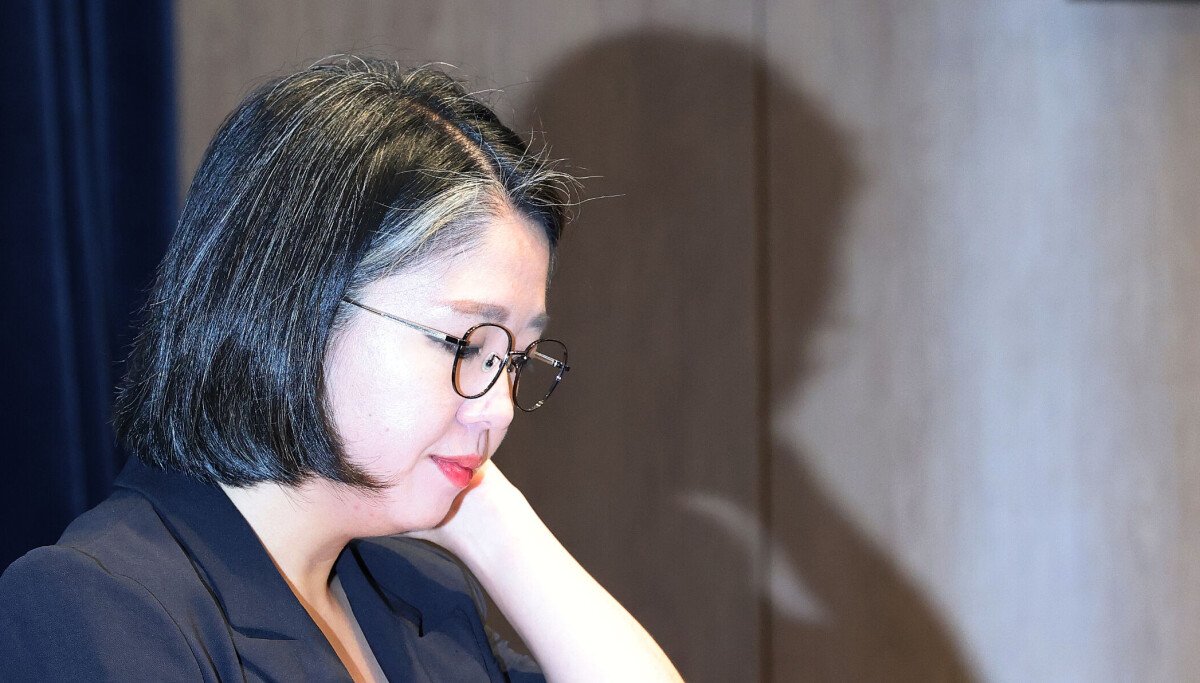
A day after that remark emerged from the Democratic Party (DP), gender equality and family minister nominee Yong Hye-in withdrew. Having described herself as an “opposition lawmaker” while demanding privileges outside convention, she blamed her departure on “the ruling party’s recommendation that I resign.” Perhaps she finally recognized her identity as a proportional lawmaker elected through the ruling party’s satellite party.
The appointing authority seemed equally confused about Yong’s identity. When nominating her, the presidential office emphasized her youth almost as much as her being a woman, calling her the right person to overcome generational and gender conflict and advance gender equality together with younger people. Yet the decisive opposition to Yong came precisely from people in their 20s and 30s.
Yong’s downfall demonstrates the widening gap between how the current ruling camp views youth politics and how young people themselves see it. At 36, Yong is certainly a young politician by age. But younger Koreans do not regard her as representing their sentiments and values. They appear to see her instead as a regressive copy of establishment politicians from the so-called 586 generation (activists born in the 1960s who came of age politically in the 1980s).
Her entry into politics based on her activist background resembles that older generation. Yet the early 586 politicians expanded their political standing by challenging established power and shared at least some emotional common ground with young people of their time. Yong instead aligned herself with established politics and exploited institutional loopholes, symbolized by her unusual distinction of winning two terms as a proportional lawmaker through satellite parties. She then resisted relinquishing the privileges she obtained. “Regressive” therefore seems appropriate.
Ultimately, the ruling camp treated her as expendable as well. It appears determined to sacrifice Yong to placate public opinion while protecting a justice minister nominee facing even greater controversy.
The ruling camp’s insensitivity toward young people has deep roots. The Cho Kuk scandal is perhaps the clearest example. Young Koreans were outraged by an outdated sensibility that treated irregularities in children’s college admissions as insignificant. Establishment politicians who came of age during an era of growth and expanding opportunities may find it difficult to understand why today’s young people are so sensitive to fairness.
Even policies supposedly designed for young people therefore often provoke anger or ridicule. Examples include a ruling party lawmaker’s proposal for housing made from discarded buses and a Land Ministry announcement about allowing bathtubs in tiny goshiwon rooms (small, single rooms usually rented out to students preparing for exams).
Young Koreans without homes are now cornered as home prices, jeonse (lump-sum deposits) and monthly rents rise simultaneously. Buying a home requires taking enormous risks, while the ladders previous generations used to become homeowners, including loans and jeonse, have long been removed. Yet instead of confronting this harsh reality and the heart of the problem, politicians offer gestures designed mainly for show. Little wonder young people find them difficult to embrace.
Jobs tell the same story. While Korea’s overall employment rate continues to rise, the youth employment rate has fallen for 28 consecutive months. The employment rate among people in their 20s has now dropped below 60 percent for the first time in five years.
In the past, this would have set alarm bells ringing throughout government, with the ruling party demanding countermeasures daily. No such urgency is evident today. Instead, the responsible ministry is busy defending and managing the aftermath of the “Yellow Envelope” act, which critics say is seriously discouraging new hiring.
When I first began covering economic ministries, I once puzzled over the unfamiliar term “gender-responsive budgeting” tucked into a government press release. I learned that it derived from the concept of gender sensitivity. Even policies that appear objective and gender-neutral can produce unintended effects because of male-centered social structures, so policymakers should recognize those effects and reflect them in policies and budgets.
The principle was to look beyond a policy’s appearance and examine its substance.
Given the political establishment’s severe insensitivity toward young people, perhaps Korea now needs a similar system of “youth-responsive budgeting.”
The ruling party should address public distrust in its governance rather than frame declining support as an ideological battle.
As AI races toward greater autonomy, its promise of breakthroughs comes with risks no company or country should decide alone.
Mandatory service may fill posts temporarily, but lasting regional care requires better living conditions, smart hospital networks and AI-driven medicine.
Public libraries should be restructured as nationwide hubs for AI learning, public data and community access to national policy.

